There are things he feels like he has to fix, and things he knows, now, deep in the surest parts of him, that he simply wants to. How do you grieve a family? A marriage? Who prays over it, gives it the final dignity of clean linen and cool water? Does it get a funeral, or does it just lay itself down, mourned, but without mourners? [loc. 4509]
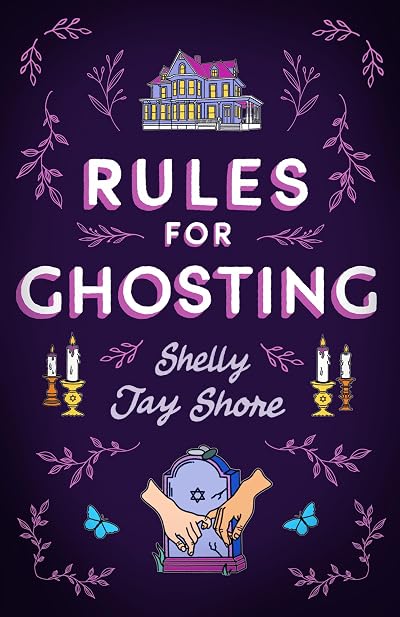
The first ghost Ezra Friedman ever saw was his grandfather, his Zayde, when he was a small child. Of course nobody believed him: if they had it might have been rather inconvenient, since the Friedman family business is a Jewish funeral home. They don't believe him when he tells them he's not a girl, either... but grown-up Ezra, our protagonist for most of the novel, transitioned when he was twenty, and his parents and siblings have been supportive and loving.
The novel begins as Ezra's moving into an apartment with some of his ex's queer and trans friends. He meets the downstairs neighbour, Jonathan, and is immediately attracted: Jonathan, though, is recently widowed, and Ezra soon encounters the ghost of his husband Ben. Meanwhile, Ezra's mother dropped a bombshell at Passover seder, and Ezra finds himself back at the Friedman Family Memorial Chapel, helping his father and brother run the place.
Ezra is the kind of person who wants to help everyone, fix everything, make everyone happy. But some things can't be fixed, and maybe it's time for Ezra to start prioritising his own needs.
This was a gentle romance with great characters -- Ezra's family in particular are complex and credible -- and a conflicted protagonist who's thoroughly sensible and learns to value himself as much as he values those he loves. There's a lot about Jewish tradition and Jewish funeral rites, as well as the queer and trans community. And one thing I really cherished, because it's so rare: everyone is nice, even the apparent 'villain'.
Read because: I'd heard good things about this novel, and I wasn't disappointed.
No comments:
Post a Comment