Wednesday, May 27, 2026

2026/080: A Natural History of Dragons — Marie Brennan

What sort of woman, upon being kidnapped by smugglers in the middle of the night, would jump for joy at the thought of questioning them about dragons? [p. 130]

Set in a world reminiscent of our own in the nineteenth century, where dragons live wild in the remote heights and forests. Our narrator, Isabella (née Hendemore) -- who will, we are assured, later become the world's pre-eminent authority on dragons -- is the child of wealthy gentry. Aged seven, she dissects a pigeon with her brother's penknife to see how the wishbone works. Aged fourteen, she dresses as a boy to join the hunt for a wolf-drake that's plaguing the local farms. 

She would rather not marry: but her (excellent) father gives her a list of eligible young men who own Sir Richard Edgeworth's A Natural History of Dragons, and she encounters one of them, Jacob Camherst, at a menagerie. (Where, of course, she is not supposed to be.) Marriage ensues. And Jacob proves willing to let her accompany him on a scientific expedition to the remote, somewhat Slavic-flavoured land of Vystrana. There, Isabella sees her first wild dragons, and makes some discoveries, and has plenty of adventures. Not all of these are cheerful.

Isabella, with her passionate drive for knowledge and her often-reckless decisions, reminded me strongly of Amelia Peabody (see Crocodile on a Sandbank and others), though she has the added complication of being a teenager. She's intelligent, driven and thoughtful -- though sometimes not as considerate of humans as of dragons. And she grows up very quickly in this novel. I did enjoy it, though the pacing was uneven and I'd have liked more worldbuilding: and the dragons (beautifully illustrated throughout by Todd Lockwood: you don't get that in an audiobook) were quite distinct from most fantasy dragons, being neither vocal or amiable. I got a real sense of them as creatures of flesh, blood and bone -- their bones being especially intriguing.

I think this suffered by my reading it so soon after The Signature of All Things, which also featured a female scientist and was also unevenly paced: that was a more literary novel than this grand adventure, though. I intend to read more of Brennan's series, because I'm fascinated to discover what Isabella does next.

Read because: fancied something light; the 'Exploring Science Fiction and Fantasy' reading challenge has 'Dragons' as a prompt; I bought this book in 2017, which is a long time for it to languish unread.

Tuesday, May 19, 2026

2026/079: A Magical Girl Retires — Park Seolyeon (translated by Anton Hur)

In an act of balance, the universe conferred power on those who had the least, and that was why magical girls existed.

The nameless protagonist of this short novel is 29 years old, unemployed and burdened with credit-card debt. She's also still mourning her dead grandfather, a watchmaker, whose trade she once dreamt of following. One night she decides to kill herself by jumping from a bridge. But she's interrupted by a stranger, a magical girl (the 'girl' is not age-specific) named Ah Roa, who believes that our protagonist is the Magical Girl of Time -- the most powerful Magical Girl of all.

Our protagnist is taken to a union meeting, and learns that magical girls -- the phrase is synonymous with 'female superheroes' -- have to deal with the harsh realities of the world, just like everyone else. Every Magical Girl gained their powers at a moment of powerlessness; every Magical Girl has to work, to pay the bills, to deal with everyday microaggressions. And some aspects of a person are deep-rooted: when our protagonist finally manifests her talisman, it turns out to be ... a credit card

This is a short, sweet novel, only 160 pages in print; the audiobook, narrated by Shannon Tyo, is under three hours, and I listened to it in a single evening. Though it's ultimately life-affirming, there are dark undercurrents: also a hint of sapphic romance, a nihilist Magical Girl who doesn't think humanity worth saving, and an exciting encounter with terrorists at Heathrow Airport. 

Read because: 'Listen to an audiobook by an author of Asian and/or Pacific Island descent' prompt in the Libro.fm 2026 Audiobook Listening Challenge. The author is Korean.

Monday, May 18, 2026

2026/078: Slow Gods — Claire North

It is not that I am not moral, in my own way.
It is simply that sometimes, rather like the rules of physics that should contain me, I forget. [loc. 1814]

Reread for book club: my initial review is here. This time round I listened to the audiobook, not least because I was intrigued by how the narrator (Peter Kenny) would handle the multiple pronouns... extremely well, as it turned out.

Unusually for the Lockdown Bookclub, everyone liked the book! We discussed the supernova as a metaphor for climate change (everyone knows it's happening but some people refuse to believe it can be that bad); what constitutes a god (the title has plural gods: is Maw one? is the Consensus?); why a couple of us initially read Maw as female; whether North's space opera is comparable in scale and scope to the works of Iain M Banks (I think we agreed it was, though more humane and compassionate, and without awkward / improbable sex scenes: also, first-person narrative).

Read because: bookclub pick.

2026/077: The Palace Beneath the Sea — Lauren Wiesebron

"I am the korrigez who founded Ys, both above and below the waves... and now I am here to take back what's mine and lay waste to what never should have been built!" [loc. 4508]

Nolwenn and her family are lighthouse keepers, defending the city of Ys. They use lenses to focus the moon's rays, to kill teuthes -- great monsters from the deep -- that threaten the sea-defences. She's been lucky, finding seasilk (a rare and precious commodity that can protect against the black tide) and is summoned by the queen, who flirts with Nolwenn and tells her to fetch enough seasilk to provide shield-nets for the lighthouses as well as the city.

Nolwenn recklessly rows out one night and is attacked: but she's rescued by a merperson, a korrigez who she names Morvan after the chieftain in a popular serial. Morvan takes Nolwenn to Ys-below, a coral palace deep in the ocean: she learns a lot (some of it rather uncomfortable) and falls in love, but yearns for her family, for sunlight, for air.

The worldbuilding is a delight: I loved the reimagining of the Breton folk tale about a city drowned by the sea. The half-humanoid, half-fish korrigez (Breton for 'mermaid') are fascinating, as are the ecology and economy of Ys-below. Coral for communication! Wiesebron is a marine ecologist and admits in her afterword that 'the fantasy of suddenly sprouting fins is one that I enjoyed, albeit from the safe and dry distance of my pen and paper' [loc. 4923] And I loved the resonances with the in-universe fiction 'Leylou Among the Korrigez'.

But I do think this novel could have done with another edit. There are pacing issues: the first third of the book is really slow, and the last third feels rushed. There are typos and infelicities: 'discretely' instead of 'discreetly', 'it's' instead of 'its', someone knowing something and a few pages later not knowing it. And Nolwenn, though she's twenty-three, sometimes behaves like a much younger girl: she's prone to impetuous behaviour, and doesn't always know the rationale behind her own decisions.

Really interesting setting, slightly disappointing prose -- but there's a fascinating romance, and a suitably epic finale.

Thanks to the publisher and Netgalley for the advance review copy, in exchange for this full honest review. UK Publication Date was 21st May 2026.

Sunday, May 17, 2026

2026/076: A Fair Maiden — Joyce Carol Oates

Just a roll of the dice. She was risking nothing. No danger in upscale Bayhead Harbor, which was very different from Atlantic City, fifty miles to the south, where Katya Spivak would never have been so naive as to go to a man’s house, no matter how harmless he appeared, how gentlemanly or how rich. [p.13]

Katya Spivak is sixteen years old, working as a nanny for a rich family in the upmarket coastal town of Bay Harbor -- a far cry from her working-class origins in New Jersey. One day, while admiring lingerie in a shop window, an elderly man asks her what she would choose. He is Marcus Kidder, nearly seventy but still elegantly dressed: a former author of childrens' books, a sophisticated artist. He befriends Katya -- is it friendship? -- and gives her not only money but attention (commodities lacking until now in Katya's life): and, chastely, beguiles her.

For three-quarters of the novel (which is only 166 pages in print) this seems like a routine seduction, with an older man preying on a very young woman -- albeit one who, because of past experiences, thinks she can handle whatever Kidder might do. Katya's independence and confidence, though, is at least partly a facade covering an absent father (who she misses a great deal), a neglectful mother who tries to borrow money from Katya to pay her gambling debts, and an emotionally distant employer. Kidder's attention seems harmless at first, and even when it becomes less so Katya is convinced that she can handle it. 

Then, when the ante is upped, a fairytale is told, the story of an old king and a Fair Maiden: and it is the pivot on which the whole story rests.

Oates manages a happy ending, of sorts, and presents a duo of fascinating character studies: of Katya herself, out of her depth for most of the book, and making some bad decisions; and (at one remove) of Marcus Kidder, who we only ever see through Katya's eyes. I cannot say that I liked either of them: both manipulative, both a little lost. But I did feel compassion for both.

Friday, May 15, 2026

2026/075: The Signature of All Things — Elizabeth Gilbert

Alma’s world and the moss world had been knitted together this whole time, lying on top of each other, crawling over each other. But one of these worlds was loud and large and fast, where the other was quiet and tiny and slow—and only one of these worlds seemed immeasurable. [p. 162]

Alma Whittaker, the focus of this novel, is born in 1800 and grows up in a wealthy household on the White Acre estate just outside Philadelphia. Her father Henry grew up in poverty, impressed Sir Joseph Banks with his initiative and his horticultural gifts, and made his money cultivating cinchona, a remedy for malaria. 

Alma is brought up to be fascinated with the natural world and to think for herself. At first, the only surviving child of Henry and his Dutch wife Beatrix, Alma is rather lonely: suddenly she acquires an adopted sister, Prudence, who is beautiful but reticent. She and Alma (who is plain) are never close.

The girls grow up. Alma develops a fascination with mosses, and conducts scientific correspondence with botanists all over the world. Prudence marries and becomes a committed abolitionist: Alma marries rather later, but her husband -- Ambrose, an artist -- is ... not what she had expected, wanted, craved. After her father's death she makes some momentous decisions, travels to Tahiti (where Ambrose had been exiled), and thence to Amsterdam.

I've done my best to avoid spoilers in that summary: I found the novel very slow, but a lot happens, actually as well as emotionally. I very much liked Gilbert's depiction of Alma as a sensual, as well as an intellectual, individual: I was fascinated by Alma's mosses, and her theories. I did not warm to any of the other characters -- perhaps because Alma, though she loves them, maintains some emotional distance.

This is also, in a way, a novel about early nineteenth-century science, and especially the theory of evolution. Alma considers the possibility: 'those who survived the world shaped it—even as the world, simultaneously, shaped them'. But there is no room in this world view for compassion, altruism, selflessness. Only on her return from Tahiti does she read of a new book by Charles Darwin...

Looking back on the experience of reading this novel, I find much to admire. Gilbert's prose has an Austenesque cadence that fits Alma very nicely ('her botanical drawings—which were never exactly beautiful, but always beautifully exact') and there are many vivid moments. But it felt so slow and claustrophobic while I was reading: and Alma's escape departure from White Acre, though an immense relief to me as well as her, did not immediately improve matters. And there's one scene, on Tahiti, that really bothered me: but ... spoilers.

...she knew that the world was plainly divided into those who fought an unrelenting battle to live, and those who surrendered and died. This was a simple fact. This fact was not merely true about the lives of human beings; it was also true of every living entity on the planet, from the largest creation down to the humblest. It was even true of mosses. This fact was the very mechanism of nature—the driving force behind all existence, behind all transmutation, behind all variation—and it was the explanation for the entire world. It was the explanation Alma had been seeking forever. [p. 434]

Monday, May 11, 2026

2026/074: Ring the Hill — Tom Cox

I didn’t see the Tor at its best that evening. Dusk was coming on but the weather was a little drappy — a Somerset word I’d recently learned, which means ‘starting to rain slightly’. Even without the benefit of one of its legendary sunsets, the view from the top pushed you back onto your heels, opening the world’s mouth and allowing you to see humblingly down its throat. [loc. 146]
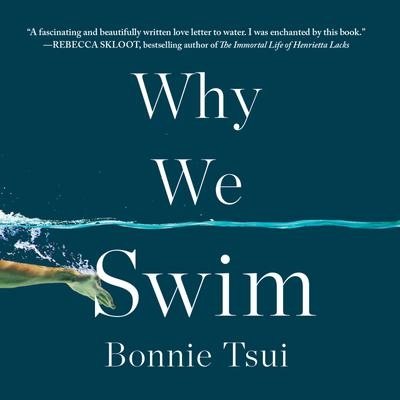
Read by the author, so it felt almost like going for a long walk with Tom Cox and listening to him talk -- about moving house with plants and cats, about hares and the lack of them in the West Country as compared to Norfolk, about life on the Dartington estate in Devon, about his cats (I teared up hearing him talk about the deaths of two elderly felines).

The book is (notionally) based around hills: Glastonbury Tor, the hill in Derbyshire where he lived one winter, the hills of Dartmoor, et cetera. But Cox rambles in prose as well as in the countryside, so he might be walking up a hill and thinking about a pheasant named Clarence (though the pheasant does not know his name, of course). Ring the Hill -- the title is from a medieval text about nicknames for hares -- was gentle and funny, gorgeously written and endlessly intriguing. It made me want to get out in the countryside and walk for miles, preferably alone. And then go to the beach and swim in the sea*.

*Assuming no sewage alerts :(

Wednesday, May 06, 2026

2026/073: Platform Decay — Martha Wells

Mensah just looked at me and said, “SecUnit.” In that voice. The voice that’s the only reason I’m still here and alive and surrounded by … friends. (Emotion check: Good, actually. Really good.) (Emotion check: It is still hard to say the friends part.) [loc. 2474]

Murderbot is asked by Dr Mensah to help some family members escape from a space station run by evil corporation Barish-Estranza. Turns out the family members (including children, ugh) are being more or less held hostage and may be forced to work for B-E. There are also multiple SecUnits on the loose, running Murderbot's 'hack your own governor module' code. This includes Three, previously liberated by Murderbot and still looking to its liberator for guidance.

I liked the space station -- actually a torus surrounding a mined-out planet, with distinct zones -- and the exploration of forced labour, corporate abuse of power, and (maybe?) racism. And I loved Murderbot's self-help module, which pings every time Murderbot's neural chemistry goes weird, and asks for an emotion check. But there's more action here, and less reflection, than in the earlier instalments: I missed Murderbot's downtime. And there's no ART, and precious little Sanctuary Moon. An enjoyable read (and it's not a long novel) but I still prefer the novellas.

Zero. Mass. Transport. This is supposed to be a civilized space station, in space, why the fuck am I driving a ground vehicle to get to a fucking port on a fucking— (Emotion check: I am absolutely fine.) [loc. 2150]

Tuesday, May 05, 2026

2026/072: Disfigured — Amanda Leduc

Why, in all of these stories about someone who wants to be something or someone else, was it always the individual who needed to change, and never the world?

Subtitled 'On Fairy Tales, Disability, and Making Space', this is partly a memoir of the author's experience of cerebral palsy, and partly a survey of the ways in which fairytales 'other' people with disabilities, people who don't look right, people who are different. Sometimes fairytales depict outward disability / difference as a sign of inward wickedness, for example ugly stepsisters or a hunchbacked witch; in other stories, it's the result of a curse or a spell, and can be 'mended' by completion of a quest or a trial.

Leduc doesn't restrict her analysis to the tales popularised by the Brothers Grimm or Madame d'Aulnoy: she also examines the 'Disney princess' genre, and Marvel's superheroes -- for instance, Steve Rogers' disabilities pre-supersoldier serum. Blending her analysis with subjective personal experience and medical documentation sometimes sits oddly with the more scholarly discourse, but it also makes the book feel more personal.

This worked very well as an audiobook -- read by Amanda Barker -- though I kept wanting to highlight particular arguments or facts!

Monday, May 04, 2026

2026/071: Planesrunner — Ian McDonald

It was a deep, dark shock, a fist clenched around the heart, for Everett to realise that every decision he had made, every action he had taken, had caused someone to pay a high and terrible price. It was never like that in the action movies. There were never any consequences. [loc. 3205]

On a rainy December night in London, thirteen-year-old Everett is walking along the Mall to meet his father Dr Tajendra Singh: they're going to a lecture on nanotechnology at the ICA. Then Tajendra is abducted, leaving Everett with a few photos of the car in which he was taken away -- and, soon, an email that plunges Everett (named after Hugh Everett, who developed the Many Worlds theory) into a complex and perilous quest through multiple realities. Tajendra knows his son's aptitude for maths, pattern-spotting and connections. He's made plans to cover every contingency, and his priority has been to safeguard the infundibulum, a map of the multiverse which can lead the bearer -- via Heisenberg gates -- to trillions of other Earths.

I love the worldsbuilding: the world where Einstein was a quantum theorist, the world where the Moors invaded Britain after the Romans, the world where something mysterious has happened to the moon, even the world where, in 2010 or so, Michael Portillo is PM.  And of course E3, which is where Everett finds himself at the end of Planesrunner -- on an airship, in the company of multiple strong female characters. (E3's London is fascinating, not least for its variations on the inequalities of race, class and gender.) The YA label, and the sometimes-predictable plot beats, don't detract from Planesrunner's pleasures, and Everett is a likeable, relatable and interesting protagonist, solidly grounded in the mundane realities of teenage life despite being plunged into adventure.

This is Ian McDonald's first YA novel, which I purchased in 2013 and have unaccountably left in the TBR for all those years. I shall be reading the other two novels in the Everness trilogy soon, and not only for Everett's adventures and a conclusion to the story. 

Sunday, May 03, 2026

2026/070: The Paranormal Ranger — Stanley Milford Jr

Just because I cannot fully explain the event doesn't make me think it wasn't real... my experiences with the paranormal have taught me to coexist with mystery when I must.

Subtitled 'A Navajo Investigator’s Search for the Unexplained', this is Stanley Milford Jr's account of his life as a Navajo Ranger -- a law enforcement officer in the Navajo reservation, responsible for a vast area with a relatively low population. While much of his work was mundane, there were some cases that (at least in the eyes of those involved) had a paranormal aspect: skinwalkers, aliens, hauntings, Bigfoot. Always careful to ensure that the person reporting a crime or an issue felt heard, Milford was also intrigued by the unexplained.

Much of the book is narrated by Milford himself (he has a very restful voice), with Duane Milard voicing the chapters that recount Navajo myth. Milford's parents were Navajo and Cherokee, and he grew up hearing the legends and traditions of both tribes. His theories about the paranormal, unsurprisingly, draw heavily on these legends, especially the concept of parallel planes of existence. And he does present his views as theories, rather than certainties.

This book offers an insight into 21st-century indigenous attitudes towards the unexplained, and towards mainstream Western culture that dismisses 'superstition'. And it reminds us that 'urban myths' (here, of course, not exactly urban!) serve a social purpose -- warnings and checks on antisocial behaviour -- as well as, perhaps, documenting the incursions of the uncanny.

Saturday, May 02, 2026

2026/069: Floating Hotel — Grace Curtis

Media featuring extra-terrestrial intelligence (‘subversions of the supremacy of man’) had been banned Empire-wide for several generations. Even the word ‘alien’ made Uwade flinch with taboo. [p. 37]

It's the 29th century. Humanity has spread across the galaxy. The Empire -- and its 500-year-old Emperor -- governs many planets, quite a few of which are gutted for their resources before being abandoned, their populace sent to mine the next resource-rich world. 

But there is still luxury: the Grand Abeona Hotel (really more of an interstellar cruise liner) travels its leisurely circuit, offering an 'analogue paradise' that is screen-free, along with the luxuries and services of a lost golden age. The hotel's manager is Carl, who came aboard as a stowaway some decades before and became the protege of the then-manager, Nina Windrose. The crew members he's recruited are, like him, people with secrets in their pasts, people with something to run away from. But this circuit is different: the seditionist revolutionary known as the Lamplighter has been traced to the Abeona, and the Empire are keen to apprehend him.

Each chapter focuses on a different individual, from Carl himself to Daphne (brought aboard as the maid to a vapid socialite, abandoned by her and promptly offered a waitressing job) to Professor Azad (a delegate at the annual Problem Solvers’ Conference, held on board, who's paired with a young analyst who's her polar opposite), from Mr and Mrs Applegate (Imperial spies and torturers) to Angoulême the lounge pianist, from Rogan (the lifeguard who can't swim) to Uwade (the receptionist who believes someone is sending her love poems -- actually Shakespeare sonnets). Switching from character to character gives the novel a somewhat fragmented feel, but the plot ticks along in the background, sometimes very subtly.

Floating Hotel has been acclaimed as 'cosy found-family in space' -- though see above under 'torturers': there are some dark and nasty scenes). I'd disagree. There's an ambitious plot thread about what the Problem Solvers' Conference is actually solving, as well as the quest for the mysterious Lamplighter and the undercurrent of revolutionary sentiment. Though the denouement felt somewhat flat in contrast to the rest of the novel, I thoroughly enjoyed the entire experience.

I was reminded of  The Grand Budapest Hotel, and also of Claire North's excellent Slow Gods, perhaps because of the broad sweep of different cultures, perhaps because of the foregrounding of social class. Narratively speaking, they are very different -- tight first-person versus multiple vignettes -- but there's an innate optimism to both.

A couple of editing quibbles: a place where metal things are made is not a 'forgery', and if someone has omitted a pedicure they will not demonstrate unpainted nails by spreading their hands...

Friday, May 01, 2026

2026/068: She Made Herself a Monster — Anna Kovatchevka

"Humans have always needed people like me—as long as we’ve needed monsters.”
... “Do people need monsters?”
“A person can’t fight a plague, but they can fight the beast that cursed them with it. If not vampire or varkolak, it’s the Devil, or it’s witches. My way doesn’t end in witch burnings.” [loc. 1308]

Anka was orphaned on the night she was born: a house fire, a mother giving birth on bare earth lit by flames. The people of Koprivci, a small town in Bulgaria, believe Anka is the reason for the streak of stillbirths and fevers that has claimed nearly all of the children born in the last sixteen years.

Anka is miserable and lonely: her only close friend, Margarita, is to be married soon, to her childhood sweetheart. Her cousin Kiril (with whom she's had a love-hate relationship since they were little) is back from medical school, planning to rid the town of superstition and apply the techniques of modern medicine. And her uncle, known as the Captain, is determined to marry Anka herself as soon as she starts menstruating. Luckily the housekeeper, Yulia, is on her side, and helps her conceal her periods and consult with Minka, the village midwife.

Then a stranger comes to Koprivci: Yana, whose face looks shadowed even in bright light (I think she has vitiligo) and who is a self-proclaimed hunter of vampires and witches. There's certainly a witch in town, according to the townsfolk: Nina, a young widow, who's spent four months in the town jail. But when Yana arrives, occult signs multiply: dead hens, eggs full of blood... It's beginning to look as though there is a vampire in Koprivci: there is certainly a predator.

She Made Herself a Monster builds slowly, exploring ritual and story-telling: it's punctuated by Slavic folk tales, which cast the story's events in different lights. There's a deliciously Gothic ambience, but the rumours and stories of the supernatural are never precisely resolved. The focus is on Anka, and her relationships -- with Kiril, with Margarita, with the Captain, and especially with Yana. Anka is stronger than she seems at first, and she has agency: and in the febrile, superstitious atmosphere of Koprivci, the right words at the right time can spark a conflagration.

NB: The author was born in Bulgaria, but now lives in America: the novel was written in English.

Saturday, April 25, 2026

2026/067: How to be Human — Paula Cocozza

She stared at him, her gaze a kind of cage, throwing down bars to the lawn to keep him trapped. One moment of inattention, and he would be free. [p. 7]

Mary, who lives in East London, has recently split up with her abusive fiancé Mark: she's kept the house, and has a comfortable life with little excitement or social contact. Her next-door neighbours, Michelle and Eric, have a new baby named Flora, to whom Mary is drawn. But she's also fascinated by the dog fox who frequents her garden. 

Gradually, as her life outside the house diminishes (signed off sick from her stressful job, more or less disconnected from her mother) she begins to form a kind of relationship with the fox. 'He was her friend. He alone knew that she was not so strange.' He comes into her house, he brings her presents -- boxer shorts, an egg, a shoe, a glove -- and she tries to name him (Sunset? Darcy? Red?) without success. '...he really wasn’t hers to name.'

It's soon obvious that Mary is not only introverted, but possibly losing her grip on reality. On the other hand, the fox is very real, and some of the novel is narrated from his viewpoint. His pregnant mate was killed by a car last autumn: now, in an urban summer, he forms a definite bond with 'human Female' and mistrusts Mark when he reappears at Michelle and Eric's barbeque. ('Salty snail odour tunnelled into his muzzle. From the fresh male who was an old male who was a slithery male...Come fresh to stalk around the human Female with sly feet and rippety eyes. Spruckling toadsome.')

Mary's slide into insanity -- taping up the front door; obsessing about Flora and the need to teach her Mary's own, new-found, love of the natural world; basically abandoning her job -- was uncomfortable to read, but her joy in the fox was a delight. It's hard to tell, though, how much of what happens on the page is real in any objective sense. For instance, it becomes clear fairly late in the novel that the 'abusive' Mark may have been a victim of Mary's own violent impulses. (He's still unpleasant, though.) Mary isn't the only character with psychological issues: Michelle is clearly suffering from post-natal depression. When Flora briefly goes missing, it triggers some unpleasant scenes.

Despite the anguish, the psychological issues and the tensions, I liked this novel a great deal, especially the fox-viewpoint passages and Mary's bliss in the natural world. How to be Human is a twisty novel, and while Mary is not a wholly likeable character, Cocozza's portrayal of her is a fascinating portrait of an unusual human.

...he bent one ear back \ to the human Female on the move through the ferns / one ear forward to the new noise. [p. 183]

Friday, April 24, 2026

2026/066: Beyond the Blue Horizon — Alexander Frater

[the] Imperial passengers... set off knowing they were flying the flag that held sovereignty over much of the territory through which they would pass. That, I thought, must have been immensely reassuring. All I had were a lot of last-minute worries, a closely typed seven-page itinerary and a booklet of tickets which, my exhausted travel agent said, was probably the largest ever issued on British Airways coupons. [p.40]

Frater, who was deputy editor and travel editor for the Observer, took a break from journalism to attempt a recreation of the Imperial Airways 'Eastbound Empire' service, inaugurated in 1936, which took nine days and stopped at 35 airports en route.

Frater is fascinated by the machinery of flight (he's keen on telling us about the engines of each plane he flies on) and, especially, by the travails of early air travel. Imperial Airways used 'flying boats' for much of the journey from London to Brisbane, which wasn't an option open to Frater: instead he zigzagged around the route, having to backtrack in order to visit every stopping-point. Desert forts in Saudi Arabia (where Imperial's aircraft used to fly in pairs), small towns on remote islands... 'It was thus essential to get to Calcutta in time for the Dhaka flight but, by the same token, I had to make my way there via Kanpur and Allahabad, both Imperial fuelling halts.' [p.212]. Some stops were more fraught than others: though he was welcomed everywhere, the welcome sometimes -- for instance, in Timor, mid-civil war -- firmly prevented him from exploring on his own.

Of course the world has changed since 1936... though it's also changed since this book was written in the early 1980s. ('I smoked a cigarette, recalling that I wouldn’t have been allowed to do so aboard an HP 42...' [p. 42]). Some of Frater's attitudes felt very dated to me: the way he sums up every woman he meets -- stewardesses, airport operatives, hotel staff -- by their size, eye colour and demeanour; his way of reporting the speech of those for whom English is a second language; his visit to a sex club in Bangkok. On the other hand, some things don't change: a security officer warns Frater that there are rumours of Iran closing the Straits of Hormuz...

I learnt a lot about early aviation, with particular reference to this most luxurious of routes: the steward's first duty in the morning, apparently, was to uncork the clarets and let them breathe in time for lunch. The technology in use was primitive in the extreme: 'Imperial’s engineers were asked urgently to devise equipment that would give a true indication of altitude. What they came up with were net containers secured to each wingtip and filled with pingpong balls. At the appropriate moment the nets were released and the balls bouncing across the limpid surface gave the pilot his crucial visual reference.' [p. 55]

A very enjoyable and informative read, despite my sense that I wouldn't have warmed to the author in person. That said, his enthusiasm, knowledge and gift for conversation -- he seems to have talked to everyone -- did a great deal to balance his flaws.

Apparently there's a film, The Last African Flying Boat, partly based on this book: it won a BAFTA for Best Documentary.

Thursday, April 23, 2026

2026/065: Renaissance — E H Lupton

“Ulysses?”
When he looked back, Eli said, carefully, “It’s pull the lever, not throw yourself in front of the trolley to save everyone.”
Ulysses exhaled. “It’s a thought experiment, Doc...” [loc. 3320]

Fifth in the 'Wisconsin Gothic' series which began with Dionysus in Wisconsin: in this instalment, Sam and Ulysses are planning a quiet summer, until Ekaterina (Ulysses' Russian grandmother) is hospitalised by a fall which she claims was due to a magical phenomenon. 

Sam, meanwhile, is sad that Ellen and Harry are moving to California -- and perturbed by the sense that there's something the library wants to tell him. While Ulysses is running himself ragged juggling hospital duty and mentoring a non-binary student, Sam wonders if last year's prophecy of 'something bad' might be coming true.  Is it coincidence that, Ekaterina incapacitated, an old enemy has resurfaced?

Oddly slow, despite the various menaces, though things speed up rapidly at the end. I'm intrigued by glimpses of Laz and Eli (the latter searching for premises in which he can set up his clinic for magic-users) and sad that, per the author, this is the last in the series to be focussed on Sam and Ulysses. I'll miss them -- but I am interested to see how things work out for Laz and Eli, and what becomes of Peregrine. And maybe one day we'll get more of Tim's story...

Coincidentally, I started reading this as I was finishing Silent Spring -- which is mentioned in the novel!

Monday, April 20, 2026

2026/064: Silent Spring — Rachel Carson

...genetic deterioration through man-made agents is the menace of our time, the last and greatest danger to our civilization. [ch 13]

Published in 1962, this book had a massive impact on the environmental movement -- indeed, may be said to have kickstarted it. Silent Spring inspired the creation of Greenpeace and Friends of the Earth, as well as influencing scientists, naturalists and politicians, from David Attenborough to Al Gore.

Carson relates, in horrific and exhaustive detail, the damages done to the natural world by pesticides such as DDT. She traces the roots of the widespread use of synthetic pesticides to the aftermath of WW2 -- not only were there chemical plants that had specialised in chemical warfare now lying idle, there was a surplus of newly-unemployed pilots to carry out crop spraying.

The sections detailing the death and destruction wreaked upon American farmland are appalling. And the effects are not limited to wildlife: Carson (herself suffering from cancer, diagnosed while she was writing Silent Spring) sets out evidence indicating that DDT, and similar compounds, are carcinogenic. Several researchers experimented on themselves to determine the effects of various pesticides on humans, with damaging and lingering results.

Carson argues that humanity is a part of the world: we live in it, and we depend on the ecosystems in which we live. Disturbing those ecosystems -- for example, by 'incidentally' killing earthworms, and thus affecting soil creation -- has widespread and often unforeseen effects. She also argues that, per Darwin, 'pests' will quickly develop an immunity to any given pesticide, so that repeated applications are less effective. instead, she champions biotic methods: biological solutions based on careful research and a holistic understanding of the ecological context. For example, introducing sterile males to a population of 'pests' can vastly reduce their numbers. Imported predators or parasites may also provide a solution, though their impact on the environment must be fully understood.

A groundbreaking work, and one that made me think about modern disease and the rise in cancers... Carson called for humanity to stop its war against nature -- it's an unwinnable conflict, and we are casualties.

Saturday, April 18, 2026

2026/063: Queen James — Gareth Russell

...given how obvious James’s affection was in public, nobody at court doubted what was happening in private. George [Villiers]’s contemporary Sir Henry Rich allegedly turned down an advantageous post in the King’s Household because he did not want anybody to assume he owed his position to his looks or an intimate relationship with the King. [loc. 5901]

A biography that doesn't shy away from James' homosexuality, but treats it as an integral part of his character. Becoming King of Scotland at the age of 13 months, his childhood was full of trauma: he was kidnapped several times, was served (or 'served') by four regents of varying calibres, beaten by his tutor, and endured the deaths of many close to him , including his mother, who he likely had no memory of: they'd been separated when he was a year old. The violence and death didn't stop when he was proclaimed ruler, at the age of 13: he was imprisoned by a faction who felt he was becoming too close to Esmé Stewart, a Catholic-turned-Protestant, who may have been the first man he fell in love with.

Russell documents James' life, with copious references and a sufficiency of political context: from reigning in Scotland, to becoming Queen Elizabeth's heir; marriage to Anna of Denmark, who sounds absolutely splendid; James' persecution of witches; the Gunpowder Plot; matters of religion (his Bible; the oppression of Catholics); his determination to avoid war -- with Spain, with the Hapsburg Empire... And woven through it all, his 'favourites', with whom (Russell argues) he was certainly having sexual relations of some kind -- though he wrote of sodomy as ‘a sin which ye are bound in conscience never to forgive’, so it's not clear what his own definition of sodomy might have been.

Russell is also at pains to show us the private man: the author of Daemonology, Basilikon Doron and A Counterblast to Tobacco, the avid hunter, the king who was happiest 'reading in his rooms, responding to letters, playing chess with Robert, taking care of his new pet armadillo'. I admired his wife immensely: well aware that he had male lovers, she supported George Villiers' ambition to become the next favourite. It was a political marriage but there is evidence of affection between James and Anna -- they produced seven children, though only three (Prince Henry, Elizabeth of Bohemia and Charles I) survived the first two years of life -- and she was also a noted patron of the arts, and a keen dancer.

A very readable biography of a complex man. I came away with a more nuanced impression of James than I'd had before reading: a man who was paranoid, but not without cause; bisexual, with a strong preference for men; a pacifist who smoothed over internal conflicts and balanced political factions; and, as Russell remarks, 'the first reign in centuries during which there had not been an invasion by, or of, England'.

Thursday, April 16, 2026

2026/062: My Beloved Brontosaurus — Brian Switek

'Going the way of the dinosaurs' should really mean becoming undeniably awesome, rather than sinking into inevitable extinction.

Subtitled 'On the Road with Old Bones, New Science and our Favourite Dinosaurs', this is Switek's* account of various dinosaur-related trips across the United States. Along the way, the author discusses the demise of Brontosaurus, deemed a misclassification of an Apatosaurus fossil (a decision that was reversed in 2015: My Beloved Brontosaurus was published in 2012); reveals their childhood fascination with dinosaurs; discusses dinosaur fighting, mating and parenting; dinosaur physiology, and why those old accounts of dull, slow-moving brutes is probably wrong; dinosaur vocalisation.

There's affection for the 'old' dinosaurs and for the joy that children -- especially this child -- found in them: but there's also great enthusiasm for the ways in which dinosaurs are being redefined, rediscovered, and reinterpreted. 

This is definitely the kind of book to be classed as Popular Science: it's aimed at a generalist, rather than specialist, audience. Which is not to say that it's lacking in theory, or that it fails to convey the wonder of science: question after question! I found it delightful: the author's passion for their subject, and their ability to explain scientific theories in simple terms, was refreshing.

*My audiobook edition was read by 'Brian Switek' who has since transitioned: the book is soon to be republished under Riley Black's name.

Sunday, April 12, 2026

2026/061: Eyeliner — Zahra Hankir

I found eyeliner in the Arab world’s deserts and in the savannas of Africa, in the hair salons of Iran, and in the alleyways of Kyoto. I found it on the faces of Indian storytellers, Latin American freedom fighters, and Palestinian activists.

A surprisingly wide-ranging and fascinating cultural history of eyeliner, from Queen Nefertiti (an influence on the author as a teenager) to New York drag queens. It begins with her own experiences as a British-Lebanese teenager, and covers the different types of eyeliner -- kohl, sormeh, kajal, and more, each with different origins and recipes -- and the manifold reasons for which people wear it. From ancient times, kohl was regarded as protective (studies have confirmed its antibacterial properties) as well as decorative: today, eyeliner is ubiquitous.

The book is organised geographically. Hankir starts with ancient Egypt and the bust of Nefertiti (with added Orientalism): then on, through the Wodaabe tribe of Chad (where it's the men who paint their eyes and flaunt their beauty); the use of sormeh as a political statement in Iran; use of kohl by both sexes in Jordanian Bedouin; Chola (Latinx) looks in California; kajal used on babies in India to ward off the evil eye, and in traditional theatre where it's used to blur gender roles as well as accentuate expressions; geisha traditions and colours, and more gender queering; drag queens in New York; Amy Winehouse and her legend; and the trend for ornate eyeliner 'graphics' on social media. 

There were a few points where connections were somewhat vague (commenting on Stevie Nicks and Patti Smith wearing eyeliner feels like commenting on random passers-by: it is, these days, more exceptional for a performer not to wear it!) but on the whole Hankir sticks to her thesis, which is that eyeliner is not only a cosmetic but a powerful connection to culture. She also interrogates the appropriation of Black and Asian trends by white influencers, the political and religious views on eyeliner in Islam (Muhammad is thought to have used kohl), and an expression of identity.

Written during the Covid years: Hankir thought it was a 'trivial' subject but her mother corrected her. 'A layered study of cultures of colour... that also brings delight to readers'. It delighted me.

Saturday, April 11, 2026

2026/060: Titanium Noir — Nick Harkaway

“You’re the shock absorber. From the Titans’ point of view, you stop the masses from realising the extent of their subjugation. You relieve them of the need to exercise raw financial and political power in the protection of their interests where those interests collide with the law. But ... you also protect ordinary humans from the consequences of that subjugation as best you can. Yours is an equivocal profession. But I hear you’re not entirely an asshole.” [loc. 2879]

Cal Sounder, consultant detective, is hired to investigate the murder of a reclusive scientist, Roddy Tebbit, who died in his own home and apparently by his own hand. Complicating the matter is the fact that Tebbit was a Titan -- a recipient of a genetic therapy called T7 (possibly something to do with telomeres) which reverses ageing, increases muscle and bone density, and incidentally makes Titans literally larger than life. On the downside, it's extremely expensive; it affects memory; and the process can be very painful.

Being at least in part a noir novel, the city features prominently in Titanium Noir. (It's unclear what the city is called, or where it's located. All we know is that it lies on the shore of Lake Othrys.) Cal knows everyone in the city's murky underworld: bar owners, weapons dealers, criminal masterminds. He also knows some of the Titans: his ex-girlfriend, Athena, is the daughter of Stefan Tonfamecasca, the man who discovered T7, and is a Titan herself. And as Cal's investigation develops more twists and complications, he needs to talk to Tonfamecasca himself.

I enjoyed this a lot, despite the genre-typical violence. There are satisfying twists and surprises, a good use of SFnal ideas, and some fascinating minor characters. (At one point Cal is lectured on the Titans by a Marxist bar owner -- see the quotation at the head of this review). I liked the blend of noir dialogue, near-future setting and elements of Greek mythology. 

I've owned this book for several years: now congratulating myself on buying the sequel, Sleeper Beach, when it was on offer.

Friday, April 10, 2026

2026/059: A Legacy of Spies — John Le Carré

...how much of our human feeling can we dispense with in the name of freedom, would you say, before we cease to feel either human or free? [loc. 3719]

Published in 2017, and very much a post-Brexit novel: at one point Smiley says to Peter Guillam "was it all for England, then? Of course it was... But whose England? Which England? England all alone, a citizen of nowhere? I'm a European."

Told from Peter Guillam's point of view: he's an old man now, retired to his family's farm in Brittany, but he's called back to London to explain his actions during Operation Windfall (as told in The Spy Who Came in from the Cold, which unaccountably I have not read in the last two decades) and refute the accusation that he's a 'professional Lothario hired by the British Secret Service, [who] roped in susceptible girls as unwitting accomplices in hare-brained operations that fell apart at the seams'. 

To some extent this is true (parallels can be drawn, as Le Carré reminds us, with the spy cops scandal) but Guillam nevertheless denies everything. He does not accept responsibility -- at least, not out loud -- for the deaths of other operatives or innocent dupes. His interrogators are dogged, but Guillam is still a professional, and still loyal to the mysteriously-absent George Smiley.

Le Carré's prose is in a class of its own: reading his work is a delight. He is the master of the balanced sentence, and his depiction here of an ageing intelligence operative, looking back on love and danger and subterfuge, is as compelling in its recreation of 1960s spycraft as in its exposition of Guillam's emotional landscape. I liked Guillam as a character, and found his inventive rebuttals of accusations very satisfactory. One interrogator tells him 'I'm trying to read your emotions. I can't. You either have none, or you have too many.' The latter, I think, is more accurate.

Thursday, April 09, 2026

2026/058: Hidden in Snow — Viveca Sten (translated by Marlaine Delargy)

All these fucking men, exploiting vulnerable women. [p. 386]

First in a new series of crime novels set in the Swedish town of Åre, a quiet ski resort surrounded by mountains and forest. Hanna Ahlander's life has imploded, both professionally and personally: her boss has 'sent her home to think things over' and clearly wants her gone, and her boyfriend has broken up with her -- leaving her homeless. 

Salvation comes in the form of her sister Lydia, who suggests that Hanna spends some time at Lydia's lodge in Åre. Hanna finds herself helping the local police with a missing-person case, a young woman who disappeared on her way home from a party. She works with Detective Daniel Lindskog, who's recently become a father (though seems to prioritise his job over his family). Soon, she's asked if she'd consider transferring to Åre...

There were some interesting themes here -- the influx of migrants in Swedish society, the multiple ways in which men abuse and prey on women, the grandeur of nature -- but I disliked both Hanna (who takes a lot of risks, not all of them legal) and Daniel (who is prone to fits of rage, can't deal with the press, and keeps complaining of the effort of fatherhood while his girlfriend is left to do almost all the work). Sten's prose style (at least in translation) failed to engage me, and I wasn't a fan of the 100+ short chapters. I also felt that there wasn't enough foreshadowing of the villain: and I wasn't a fan of opening with the discovery of a body, in a flash-forward, before introducing the characters and the missing-person case. One last niggle: Hanna's ex is (justifiably) furious that she destroyed his clothes and shoes before leaving. He's threatening to report her to the police. But she has a minor car crash, and 'when he heard about the accident, all his anger melted away.' Yeah, right.

Oh, and the Kindle edition has some weird formatting -- place names in bold italic...

Lovely wintry atmosphere, great sense of the dangers of the natural world: but I would prefer it without these people in it.

Wednesday, April 08, 2026

2026/057: You Dreamed of Empires — Álvaro Enrigue (translated by Natasha Wimmer)

It never occurred to them, of course, that half the sauces of the dishes they had just eaten were moderately hallucinogenic, and thus their delectable sense of relaxation was in truth a welcome to the esoteric between-place where the Colhua permanently resided. [loc. 278]

I had been expecting a fictionalised account of Hernán Cortés' 'conquest' of Tenochtitlán, the capital of the so-called Aztec empire. (Enrigue points out that the inhabitants 'identified as Tenochca, the descendents of Tenoch': 'Aztec' is lazy shorthand by 19th century historians.) My expectations were subverted, exceeded and left by the wayside, for this is a manic and unpredictable novel: set on a single day (9th November 1519) when Cortés and his soldiers enter Tenochtitlán and meet Moctezuma.

Cortés, here, is less a conquistador than a slaver and pirate. His intentions have been overtaken by ambition, and by the support and influence of the local tribes. He has no idea whether they will be allowed to leave the city (which is a Borgesian labyrinth of corridors and rooms), and he doesn't realise that Moctezuma is less interested in the Spanish than in the cabuayos they rode in on. Moctezuma, meanwhile, is permanently high -- his shaman somewhat exasperated by his craving for more hallucinogens -- but sharp enough to deal conclusively with vexing family matters as well as with his barbaric guests.

Enrigue has immense fun with the scenario. He switches tenses, shifts focus, editorialises from his twenty-first century perspective, and has Moctezuma hearing T Rex's 'Monolith' -- perhaps what Enrigue was listening to himself, when he wrote.

I love this room, said Moctezuma, you can’t imagine how I miss being a priest. Where there were splotches of blood, he saw sprays of flowers. The withered fingers of the hands of great warriors sacrificed during the year’s festivals swayed pleasingly like the branches of a small tree to the beat of some music he couldn’t place, though in a possible future we would have recognised it. It was T. Rex’s ‘Monolith’. [loc. 1886]

(The lack of quotation marks, indeed of any conventional marking of speech, is a quirk of style that made me pay more attention to who was speaking, rather than on the rhythms of dialogue.)

You Dreamed of Empires strays far from the usual remit of historical fiction, but it's gloriously counterfactual and immense fun, vividly described (for instance, the reek of dried blood from the priests who sit near Captain Jazmin Caldera at dinner; the difficulty of cutting one's toenails with a dagger; the shadows cast by floating flowers in a pool) and exuberantly revolutionary.

Tuesday, April 07, 2026

2026/056: The Luminous Dead — Caitlin Starling

“That was the look of somebody resigned to being the monster they knew they were.”

Gyre lives on Cassandra-5, a planet with immense mineral wealth but little else to commend it. She takes a contract to explore a particular cave system -- dangerous, because the caves are often collapsed by native beasts called Tunnellers -- which will pay enough money for her to get off-world and search for her mother. She's been surgically fitted into a life-support suit, and she expects to find a full team supporting her by comms. Instead, she gets a single person: a woman named Em.

Neither Gyre nor Em has been wholly honest. Gyre's lied about her experience: Em hasn't revealed the true purpose of the mission, or the number of failed (and fatal) attempts already made. But it's Em who's in the position of power. She can order Gyre's suit to dispense drugs, sedating her: she can even manipulate the suit remotely, dragging Gyre along.

In the darkness of the caves, Gyre keeps feeling that she's not alone. That she's being watched. And she catches glimpses of things that can't be there -- that Em assures her aren't there. But she can't trust Em...

This is an immensely claustrophobic novel: Gyre imprisoned in her suit, unable even to touch her own skin; repetitive conversations between Em and Gyre; the physical dangers of the cave, and the possibility that Gyre has been exposed to something psychotropic. Gyre has no friends, and only the memory of her mother to motivate her. Em is an orphan, who's sent many to their deaths and seems likely to do the same to Gyre.

I found this slow, and often repetitive. There are only so many sumps Gyre could swim through before it felt tedious: there are only so many arguments that Gyre and Em can have about the earlier expeditions, and about whether Em is telling Gyre the truth. Perhaps if I had read the ebook rather than listening to the audiobook (excellently and emotionally read by Adenrele Ojo), I'd have skimmed... Psychological horror, in a science fictional setting, with just two characters: it's a bold debut, despite its flaws. I'm interested to read more by Starling.

Monday, April 06, 2026

2026/055: The Weaver of the Middle Desert — Victoria Goddard

She could weave those falling descants, those trilling calls, those infinitely varied notes into her work. Could she weave sound and silence together, craft a curtain that would keep a tent silent or hold the songs of mourning or merriment within its folds? [loc. 530]

Arzu is the eldest of the three daughters of the Bandit Queen, desert nomads whose world is strongly reminiscent of the Arabian Nights. Her younger sisters, Pali and Sardeet, have each had a novella to themselves (I find that I haven't read Pali's, The Warrior of the Third Veil), so it's Arzu's turn. But she is not as young nor as ambitious as her sisters. She's already happily married to a man of the clan, and her magic is founded on the gentle arts of weaving and threadcraft.

Nevertheless, when Pali -- back from warrior training -- suggests that they visit Sardeet, Arzu is happy to embark on the journey. It turns out that Sardeet's second husband is almost as awful, in different ways, as her first, and additionally has gone a-roving. The three sisters climb a magic beanstalk to find him...

This was sweet but slight: just what I needed, halfway through an unsettling and claustrophobic novel. It's really nice to find a fantasy protagonist whose ambitions compass home and family, who is happy with who and where she is. Pali will always be heroic: Sardeet will always be beautiful (and perhaps a little too trusting): Arzu... I think her gift is happiness.

Saturday, April 04, 2026

2026/054: Zennor in Darkness — Helen Dunmore

... he will cry out against Frieda if she dances in the wind with her scarf flying above her like a banner. She dances for pure joy, but the war does not recognize that kind of dancing. It knows that she’s twirling her scarf in a prearranged signal to the U-boats lying out offshore, waiting. [p.128]

This was Helen Dunmore's first novel, and some of her tropes and traits are visible: sexual tension within the family, arresting images of the natural world, the inexorable force of gossip and rumour. The setting is Cornwall in 1917, a village near Zennor: D H Lawrence and his German wife Frieda have taken a cottage there, and Lawrence is trying to farm, and to maintain his anti-war stance.

The focal character, though, is Clare Coyne, only daughter of Francis Coyne: she keeps house for her widowed father, paints illustrations for his book on wild flowers, and spends what time she can spare with her friends Hannah and Peggy. As the novel opens, the three girls are eagerly awaiting the return of John William, Hannah's brother and Clare's cousin, who's on leave from the trenches because he's going to be made an officer. Clare is secretly in love with John William.

The novel moves between viewpoints, predominantly Clare, Francis Coyne (a prurient man who, unknown to his daughter, is having an affair with a local woman, and also keeps thinking about Hannah and her Sam making love on the beach), Lawrence himself, and Frieda. Lawrence is a keen observer of the natural world. He meets Clare when she's out sketching plants, and introduces her to Frieda in the hope that the two will befriend and support one another. But after John William has been and gone, everything changes.

A novel about women, and men, in wartime, and how war warps and wrecks everything. Lawrence's Utopian schemes, Clare's hopes -- and the hopes of a million girls like her -- of marriage, Frieda's loneliness and anger, John William's despair at the slaughter. I really disliked Francis Coyne by the end of this novel: I felt very sorry for Frieda (whose cousin, I learnt, was the Red Baron himself, Manfred von Richthofen) and I admired Clare's intelligence, composure and passion. 

Dunmore's prose is a delight, full of surprising imagery ('larks scream as though they had thrown themselves against the sky and stuck there'): I knew her slightly, a friend of a friend, and wish she had lived longer and written more.

Wednesday, April 01, 2026

2026/053: How to Fake it in Society — K J Charles

"...in effect, you must paint what you see, and not what you know to be there. Because what we see and what is there are not always the same thing. I suppose it is important to learn that." [loc. 2026]

My initial mini-review is here: I reread the novel for this full review and can confirm that it is still an utter delight.

Titus Pilcrow is a colourman, a maker and supplier of paints and colours for artists. As the novel opens, he is in despair, because his landlord (also his ex) is evicting him. By a stroke of fortune, the client he visits that afternoon has a once-in-a-lifetime offer for him: she's on her deathbed, after a suspicious accident, and she wishes to marry to deprive her unpleasant nephew of her fortune. She has the license ready, because she was planning to marry a French count -- but he's AWOL, so Titus will suffice. 

The deed is done, Mrs Pilcrow (nee Whitecross) is dead, and Titus finds himself in possession of eight thousand a year and a plethora of conmen, beggars, representatives of charities, and other ne'er-do-wells who presume, correctly, that he has no idea how to handle his new-found wealth.

Enter Miss Whitecross's intended: Nicolas-Marc, Comte de Valois de La Motte, exquisitely dressed and outrageously handsome, and more than happy to assist Titus in refreshing his wardrobe (Titus likes bright colours, and Nico persuades him to indulge himself), entering Society, and dealing with importunate friends, relatives and hangers-on. Nico tells Titus that he is hoping to restore his mother's reputation after the scandalous Affair of the Diamond Necklace.

This, regrettably, is a lie. Nico and his beloved cousin Eve are down on their luck, pursued by brutal gangsters for a loan they can't repay. Yes, his first thought was to swindle Titus: no, he didn't expect to like him.

Titus, meanwhile, is not stupid. He is fairly sure that Nico wants something -- and Titus, a decent bloke, is happy to grant it, whatever it may be, in exchange for the pleasure of Nico's company. Nico is kind, and witty, and protective: Nico helps Titus stand up to both his ex and his older brother, and exacts vengeance on those who abuse Titus's good nature. He may be a criminal, but he is also a decent bloke.

This was a highly enjoyable novel, with a setup worthy (and reminiscent) of Georgette Heyer, a satisfying amount of technical detail about 19th-century paint and dye technology, and vivid, witty dialogue. There was a genre-typical 'dip', shall we say, near the end, but I was confident in the author's ability to resolve it in a credible and dramatic manner -- which she did, with a definite emphasis on the dramatic. 

I don't think this novel would have worked as well as it did without the dual viewpoints: it did mean that the reader knew more than the characters, but that's better than knowing less (as in, for instance, Any Old Diamonds). And I loved the supporting cast: Eve in particular, who deserves a novel of their own, and the Thorpes who keep house for Miss Whitecross and then Titus, and Titus's nicer brother Vespasian.

Thanks to the publisher and Netgalley for the advance review copy, in exchange for this full honest review. UK Publication Date is 30 April 2026.

Sunday, March 29, 2026

2026/052: The Sapling Cage — Margaret Killjoy

“Regardless of how we're born, we get to decide who we are and who we want to be.”

Lorel has always wanted to be a witch. Growing up in her small village, and helping her mother run the stables, is not the life she wants. But there's one problem: she was born in a male body, and there are stories of what the witches do to men who try to infiltrate their ranks.

Luckily her friend Lane, promised to the witches from birth, is determined to be a knight instead -- so Lorel takes Lane's place, while Lane heads off to the city. Loren, meanwhile, has to contend with being called a 'whelp' (the witches' term for apprentices) and walking all day. And of course she can't bathe with the other girls, despite making tentative friendships with some of them. Meanwhile, a magical blight is killing trees in the forest and disrupting the natural order. [NB: As a British reader, I found the term 'blighters' insufficiently villainous. This is a term for a nuisance, not an existential threat.] And the country as a whole is being threatened by an ambitious duchess, who's moving in on the vacant throne -- much to the disapproval of the witches (who are pretty anarchic) and the Ilthurian Knights (who are, delightfully, even more so).

The novel is presented as Lorel's first-person viewpoint, which does mean that some of the other characters are a little two-dimensional. I found the pacing uneven, and I would have liked a little more detail on the world in which Lorel and the witches are adventuring. Instead, there was more telling than showing.

But there's a lot to like. I enjoyed Killjoy's subversion of common fantasy tropes -- the knights, the nobility, the patriarchy (there was little sense of this being a patriarchal society: women seemed as empowered, or disempowered, as men of the same class.) Lorel is a seething mass of resentment, romance, ambition and hubris (100% accurate teenage mindset) which was sometimes a little wearing, but she is also brave, loyal and determined. It's a queernorm world, more or less, and Lorel is attracted to both male and female characters: she's not the only queer character, either, and learning about the different issues which others have faced is part of her growth.

Good narration by Jackie Meloche, who was great with character voices and pronunciation -- though I'm not sure why 'Dame' was pronounced 'Dam', and I spent much of the book wondering if one character was really called 'RNA' (no, it's 'Araneigh').

Saturday, March 28, 2026

2026/051: The Library at Mount Char — Scott Hawkins

“You shall be the thing [X] fears above all others, and conquers... Your way shall be very hard, very cruel. I must do terrible things to you, that you may become a monster." [p. 355]

On Labor Day, 1977, in the sleepy American suburb of Garrison Oaks, Carolyn's life changed. She and a dozen other children were orphaned, their homes obliterated, and they were adopted by 'Father'. Father, who seems very powerful, tells the children that they are Pelapi -- an old word that means 'librarian, but also apprentice, or perhaps student' -- and assigns each of them a Catalogue. Carolyn's Catalogue is language: all languages, human and otherwise. ("What if I don't want to?" she asks Father. "It won't matter," he replies. "I'll make you do it anyway.") 

And so Carolyn grows up in the Library, studying and learning to live with the other Pelapi. Nobody is allowed knowledge of anyone else's Catalogue: this is a crime with appalling punishments. Time passes, but perhaps not chronologically. And then Father vanishes, and David (whose Catalogue is war) convenes the Pelapi to try to discover whether Father is dead. And if he is, which of the other powers -- eldritch beings whose ascendance would mean the end of complex life, and possibly also the sun -- will take his place?

This is not a novel for the faint-hearted: there are some truly harrowing scenes. And it's not a novel for the easily distracted, as it's fast-paced, told out of sequence and includes a labyrinthine plot that even the plotter can't think about (due to some of the others being mind-readers). The story is peppered with foreshadowings, and with asides that indicate a very different, and decidedly more horrific, history than the one we think we know. Luckily there are a couple of Everyman characters -- wanna-be Buddhist plumber Steve, and career soldier turned special agent Erwin -- to temper the extreme weirdness and growing inhumanity of Carolyn and her siblings. 

For they are, in their various ways, losing whatever human emotions they possessed when Father brought them to the Library. Carolyn knows all languages but is laughably bad at actual communication. David is certain that violence solves every problem, and enjoys killing. Jennifer, the healer, uses drugs to soften her world. And Margaret hangs out with the dead...

The horror elements are extremely horrific: The Library at Mount Char is told, though, with black humour and a strong sense of the ridiculous. The characters are fascinating, though seldom likeable. Only near the end of the novel do we find out what really happened on Labor Day 1977: only after calamities have been averted and retribution awarded does Hawkins reveal, and conclude, the overall arc of the narrative.

Despite some pacing issues, and the ubiquitous sexual violence against strong female characters, it's a massively impressive debut novel (published in 2014: Hawkins' second novel is due in September 2026) and I would like to reread it at some stage. At least I'll be able to skip braced against some of the nastier scenes: and I'd like to see just how the overall plot is constructed, and appreciate the worldbuilding, without being distracted by atrocities.

Thursday, March 26, 2026

2026/050: You-Gin One-Gin — Douglas Robinson

"I met her on the alien spaceship."
"Oh really."
"Don't take that arch tone with me, Volodya. You're dead, remember? You don't get to be arch."
"What, there's a rule? You die, you forfeit your right to rise above a situation?"
..."Hell, I don't know. Be arch. You're Vladimir Nabokov. If you're not arch you're, I don't know, Raymond Carver."
"Anything but that," I say with a histrionic shudder. I've read his work. It feels as if he wrote it with a hammer. [loc. 3018]

A riotous, fast-paced, exuberant metafiction -- or 'sort of a novel', per the subtitle -- set at a (fictional) university in Liberal, Kansas. The story starts with a stage production of Pushkin's Eugene Onegin which not only breaks the fourth wall, but features Pushkin himself as a character. Theatre professor Kip Knurl is playing Pushkin, and his immersion in the role threatens his marriage. 

Then Kip is apparently shot -- though the x-ray shows no bullet -- and the action switches to hapless playwright Douglas Robinson, along with alien-abductee barista Sherry and the ghost of Vladimir Nabokov, as they try to discover why the play (or the character) has been targetted, and whether the chair of the theatre department has really been possessed by the spirit of a medieval poet. It's at the local lingerie league football game, though, that things get really weird...

This was great fun, witty and playful. I liked the framing narrative in which the manager of the Liberal State University Press disclaims any knowledge of or responsibility for the events portrayed within: and I really enjoyed the beats of the playscript which forms the first third of the novel. Nabokov's exchanges with the character Douglas Robinson (surely not to be confused with the author Douglas Robinson) are a delight: it's Nabokov's 'joke' pronounciation of the play's title that becomes the novel's title. And I appreciated the ways in which the novel interrogated Eugene Onegin, and how that work has been reduced from Pushkin's own metafiction to just another failed romance. (See Tchaikovsky's opera for details.) 

I would have liked the female characters to be a little more independent, instead of being defined by their relationships to men, and I'm still not wholly sure about what happened at the end of the story. But a fun, clever read which blends ghosts, literary theory, alien abduction and campus life.

Thanks to the publisher and Netgalley for the advance review copy, in exchange for this full honest review. Already published!

2026/049: The Southern Book Club's Guide to Slaying Vampires — Grady Hendrix

"He thinks we’re what we look like on the outside: nice Southern ladies. Let me tell you something…there’s nothing nice about Southern ladies.”[quote]

This does exactly what it says on the cover, and it is a delight. Patricia Campbell is a stay-at-home mother, married to Carter, who is a patronising git who cheats far from the ideal husband, though he does earn enough to keep Patricia and the kids -- Korey and Blue -- in the style to which they are accustomed. Patricia quits one book club because she'd bounced off Cry the Beloved Country and was encouraged to leave by Grace, the woman who ran the book club: instead, she joins a newly-formed book club that mostly seems to read true crime.

Which is probably why, when the charismatic James moves in next door, her initial liking quickly warps into suspicion. Kids -- Black kids -- are going missing, Patricia has been attacked by an elderly neighbour, and her mother-in-law Miss Mary is savaged by a horde of rats. ("She knew what to do if too many people showed up for supper, or if someone arrived early for a party, but what did you do when rats attacked your mother-in-law? Who told you how to cope with that?") James, though, seems so pleasant, even if Miss Mary did take an instant dislike to him. And the book club's menfolk think he's great, and that he'll bring them fortune and prosperity with the investments he encourages them to make.

When Patricia voices her concerns to Carter, his response is to prescribe her antidepressants.

The book club ladies aren't heroic, or super-powered, or even especially confident: they're also somewhat racist (though of course they'd deny that), in that it's a Black woman who has to push the plot along. There is also a great deal of misogyny in this novel, larded with religion, strict etiquette and 1990s politics: enough to make it a horror novel in a subtler key even without the revelation of James' nature.

I really enjoyed this audiobook. Bahni Turpin's narration is smooth, and the story flowed slowly but inexorably. Very impressed, too, by the characterisation of the various women, each of them an individual with a background and a life. And by the fact that their success was rooted in their domestic skills, rather than anything magical or superpowered.

Warnings for violence both mundane and vampiric; for racism (and white saviour-ism); for misogyny; for (off-page) rape and sexual assault.

Think of us what you will, she thought, we made mistakes and probably scarred our children for life, and we froze sandwiches, and forgot carpool, and got divorced. But when the time came, we went the distance.

Tuesday, March 24, 2026

2026/048: A History of the World in Six Glasses — Tom Standage

Understanding the ramifications of who drank what, and why, and where they got it from, requires the traversal of many disparate and otherwise unrelated fields: the histories of agriculture, philosophy, religion, medicine, technology, and commerce.

Standage explores the histories of six 'period-defining' drinks, from beer in the Neolithic to cola (Coca-Cola vs Pepsi) in the modern era, and explains how each beverage has shaped history.

The drinks in question are beer, wine, spirits, coffee, tea and Cola: there's an epilogue focussing on water, contrasting the lack of safe drinking water in parts of the developing world to the modern Western fad for bottled water -- often pretty much the same stuff as comes out of the tap.

There were some really fascinating connections and remarks in this book. I learnt that the Coca-Cola Company supplies 3% of humanity's total liquid intake; that Caligula drank century-old Falernian wine; about the role of rum in the slave trade and in the European colonisation of America; about the all-male coffee houses that spawned the Stock Exchange and Lloyds of London; that tea was initially vastly more expensive than coffee, and how it sparked the Opium Wars; about anti-Coca Cola sentiment in the Communist Bloc, and how Coke came to represent America while Pepsi cornered the Soviet market. (Krushchev was a fan.) There's also a fascinating appendix on how to taste ancient drinks, from King Cnut's Ale (St Peter's Brewery) through retsina to Fentiman's Curiosity Cola.

Again, this audiobook wasn't a wholly great experience. I missed being able to highlight interesting sentences, and I found the narrator's voice rather bland. But this was an interesting book and I'd recommend it as an accessible -- albeit Western-biased -- guide to the history of popular drinks.

2026/047: The Blue, Beautiful World — Karen Lord

The entire planet was at a tipping point, ripe for salvation or destruction, angels of deliverance or barbarians. And, in the meantime, bread and circuses made life bearable and occasionally diverting. [loc. 354]

Earth is struggling with the effects of climate change. A disparate group of people -- rock star Owen, VR pioneer Peter Hendrix, Kanoa and his friends in a World Council Global Government workgroup, the mysterious Tariq -- are trying to prepare the world for first contact with various alien factions, some of whom are already present on Earth.

Listening to this novel did not work well for me: I lost track of who was who, and didn't appreciate the abrupt changes of focus (from Owen's gigs to Kanoa's studies to Peter's discussions of identity). The narrator's various accents jarred, and for much of the time I had no idea what was going on. 

This is a problem with me, rather than with the book: but I suspect it didn't help that this is actually the third in a trilogy, a fact I wasn't aware of from the book's page on Libro.fm. I didn't engage with most of the characters (though I did like Kanoa, and what little we saw of Owen's sister) and I kept wanting more detail, more background.

I'll definitely read another novel by Karen Lord, but I will read it in (e)print, rather than listen to an audiobook.

Monday, March 23, 2026

2026/046: Night Life — John Lewis-Stempel

I keep looking around the dark corridor for secret drinkers, then understand that the beeriness is the fermenting combination of all the midsummer scents, and it is old and original. A Neanderthal standing on the bank of the river, spear in hand, would have known it. [p.108]

Subtitled 'Walking Britain's Wild Landscapes After Dark', this is a short collection of pieces about Lewis-Stempel's thoughts and experiences of walking at night -- on the Welsh coast, in the Lake District, and on the Thames Path at Hammersmith (adjacent to the London Wetland Centre). He's a farmer, and in some of the essays there is a lovely sense of comfortable familiarity with his land. I realise that I miss having 'my' land, the places I'd walk every day, the places so familiar that I notice any change and every seasonal recurrence.

Lots of fascinating facts and observations here: I learnt that birds flying in a V formation can fly almost twice as far as one bird flying alone; that the word 'delirium' is rooted in the notion of going off track when ploughing; that brent geese are named for their dark colour, 'brent' being a corruption of the old Norse 'brantr', burnt.

I appreciated his unease when in London ('I'm fritted by the city at night') but could not help thinking that I would not be keen on walking alone, at night, along the darkest part of the Thames Path. (Men's fears are different from women's.) Overall, though, I really appreciated his observations and his sheer joy in existing as part of the natural world.

2026/045: The Casefile of Jay Moriarty — Kit Walker

"...since when do children’s authors incite hate crimes?”
“In this case, just within the last few years,” Jay said. “If Clay was a bigot before that, she at least kept it to herself.” [p. 139]

Collects the first five instalments of the 'Jay Moriarty and Sebastian Moran' series, in which Moriarty is a brilliant hacker (and trans man) and Moran is ex-SAS. Together, they fight crime... The setting is contemporary London: the crimes they fight range from a cover-up of lethally-faulty aviation software to -- as per quotation -- a transphobic children's author, Anya Clay, revealed to be appropriating money from her own charity.

I read the first of these novellas, which is available for free at Amazon, and promptly purchased the collection, because I like Moriarty (and his evolving relationship with Moran) so much. Fun, pacy, violent and cunning: highly enjoyable, though animal lovers may wish to skip 'Sebastian Moran Gets Mauled by a Tiger'.

Friday, March 20, 2026

2026/044: Tuesday Mooney Wore Black — Kate Racculia

Dex believed in coincidences, and fate, and signs and wonders, and the great interlocking gears of the universe telling him to do things, and though he’d gotten pretty good at ignoring what the universe was telling him to do (most recently: quit your soul-sucking job and open a karaoke bar!), it didn’t mean he couldn’t still hear it screaming. [loc. 2810]

Tuesday Mooney has a comfortable life: she lives alone, except for her cat Gunnar: she tutors Dorry, her teenage neighbour who's still mourning her mother, and excels at her job as a prospect researcher for a hospital fundraising team. Her best friend is Dex (short for Poindexter), who works in finance but craves a career in showbiz. Her best friend was Abby Hobbes, but Abby vanished one night when they were both fifteen. (Tuesday tried to contact her via Abby's Ouija board, but nobody ever answered.)

Then, one night at a charity event -- where Tuesday encounters local tycoon Nathaniel Arches, and maybe flirts a little -- a flamboyant old man named Vincent Pryce drops dead in front of Boston's finest. And somehow Tuesday, Dex, Nathaniel and Dorry wind up playing Pryce's post-mortem game ('an adventure of intellect, intuition and imagination that begins now and will culminate on the night of my funeral'), with a prize that might be a share in Pryce's vast wealth ... or an item from his collection of haunted artifacts.

This is a multi-layered novel: the puzzles of the quest itself; a murder mystery; Tuesday's growing, and reluctant, attraction to 'Archie'; ghosts, Edgar Allan Poe, Goth culture, karaoke bars and urban exploration. I loved how centred Tuesday was, and related to her liking for solitude. I liked the ways in which the protagonists each had something haunting them (not literally) and how each of them confronted their past and their future. The descriptions of Boston made me want to go back. (It's been decades.) And the supernatural (or magic realist?) elements -- Amelia Earhart's goggles! -- were a delight. Plenty of humour, and a compassionate and hopeful vibe.

I've owned this for years, and only got around to it because it fitted one of the reading challenge prompts ('day of the week in the title'): I loved the novel, and I'm so grateful for that prompt! Looking forward to reading Racculia's other novels...

... when you gender-flip Indiana Jones, you don’t come up with Lara Croft—the last thing Lara Croft is is a fallible everywoman—but instead an independent, knowledgeable, determined…spinster. Indiana Jones is a spinster: self-supporting and self-contained, unmarried and unlikely to pair with any one partner.... Indy’s singleness, however—if it’s remarkable at all—is aspirational, not pejorative. So Tuesday Mooney was also inspired by an attempt to play with that double standard, to investigate ideas about independence and partnership, family and friendship, and all the other forms of love and human connection that make a life full. [Excellent interview with the author (which also explains why the title is Tuesday Mooney Talks to Ghosts in the US]

Thursday, March 19, 2026

2026/043: Rupert Wong, Cannibal Chef — Cassandra Khaw

Human is very similar to pork, after all. (I know, I know. Religious pundits say that cannibalism is forbidden in the Quran anyway. The ghouls say that this isn’t quite the same.) [loc. 61]

Despite the title, there's very little (if any) actual cannibalism in this novella. True, Rupert Wong (ex-mobster with a murky and karmically unpromising past) works as a chef for a wealthy ghoul family, serving up gourmet meals concocted from the bodies of hapless tourists: but that's only one of his jobs. He's also working off that karmic debt through community management: listening to baby ghosts who want to unionise, doing the accounts for the Hungry Ghost festivals, and -- the focus of this tale -- investigating the death of the Dragon King's daughter, slain by Furies. Yes, the Erinyes. Yes, they are Greek, but apparently there is a visa waiver scheme in place...

This is a fast-moving, vivid caper set in Kuala Lumpur and in the Ten Hells. Rupert is not a wholly sympathetic character (to put it mildly) but he has a degree of power (magical and mundane), and his role as seneschal gives him access to the most powerful players in the supernatural realm. I especially liked the God of Missing Persons. Khaw's scene-setting is packed with sensory detail, sometimes gruesome and sometimes revolting (nobody changes a corpse's underwear) and peppered with unfamiliar terms: I learnt kwee kia, bomoh, ang moh. There's plenty of dark humour and some tantalising hints about the wider supernatural world. And it's the first in a series, of which I own at least one more volume. 

Tuesday, March 17, 2026

2026/042: The Keeper — Tana French

Ardnakelty has no time for Guards. The townland will run its own investigation, spreading unseen beneath the official enquiry like ancient trailways underlie the brash modern roads; it'll reach its own conclusions, and deal out its own justice. [loc. 1069]

Third in the trilogy that began with The Searcher and continued with The Hunter. Cal Hooper's life in the small village of Ardnakelty seems settled: he's more or less engaged to Lena, and Trey is finding friends and possibly even romance. Then a young woman -- Rachel, fiancee of local big-shot Tommy Moynihan's son Eugene -- is found dead in the river. Obviously suicide, is the consensus: but there's some doubt, because the coroner's report indicates that she drank antifreeze. And Lena may have been the last person to see Rachel alive...

The dark underside of Ardnakelty reveals itself, with its 'strange intricate weavings invisible or meaningless to any outsider', the 'webs that bind people to one another, to their land, and to their past'. There are old stories here: about the ownership and inheritance of land, about the power of rumour, about dirty deals and corruption, about loyalties, memories, and fiercely-held beliefs. Cal, Lena and Trey, all outsiders in some sense, find ways of belonging (and ways in which they can never belong) to Ardnakelty. 'This place is fucking lethal,' says Trey, who may have a chance to leave.

I still don't find this series as fascinating as the Dublin Murder Squad novels, with their hints of the supernatural and their close focus on a single character: but I am impressed by French's gift of dialogue -- the rhythm of it, the idioms and the Irish -- and by her ability to make the village as much a character as Mrs Duggan, or Mart, or Bobby who used to hunt UFOs but now has a girlfriend. And her writing has immense emotional weight. Sometimes I had to pause and reread a paragraph to appreciate the nuance and the layers.

Thanks to the publisher and Netgalley for the advance review copy, in exchange for this full honest review. UK Publication Date is 2nd April 2026.

Rumour is one of Ardnakelty's primary weapons, the glinting flipside of its dark silences. [loc. 3618]

2026/041: Temeraire — Naomi Novik

You may value their lives above your own; I cannot do so, for to me you are worth far more than all of them. I will not obey you in such a case, and as for duty, I do not care for the notion a great deal, the more I see of it. [p. 196]

Audiobook reread: I first read this as an arc in 2005, and reread in 2019. I still love this book a great deal, and had a better sense of the pacing when I listened to the familiar procession of events. Splendidly read by Simon Vance, who gives Temeraire a very slight 'foreign' accent, perhaps hinting at his mysterious origins. I'm so tempted to buy the audiobooks of the whole series...

Sunday, March 15, 2026

2026/040: Enshittification — Cory Doctorow

Compared with the climate emergency, genocide, inequality, corruption, democratic backsliding, authoritarianism and sustained racist, homophobic, misogynist and transphobic attacks, the internet is just a sideshow. But the internet ...is the communications medium we will use to organise to save our species and planet from their imminent eradication. We can’t win these fights without a free, fair and open internet. [introduction]

Audiobook, read (with vigour and enthusiasm) by the author. Doctorow's foundational argument is something most internet users will agree with: that big internet sites, such as Facebook, Amazon, and the-site-formerly-known-as-Twitter, have become much less usable and user-friendly over recent years. (I would add Del.icio.us, Vinted, Goodreads, LiveJournal...)

Doctorow tracks the process of 'enshittificaton' through case studies of Facebook, Twitter, Amazon and Apple. He describes it as a process in three stages. First, the platform is good to its users; then it's good to its business partners; and finally it's good to the company itself, clawing back all profits. Some really eye-opening examples, clarifying the trend towards charging for 'premium' features that used to be standard.

Back in the days of the 'good internet', there were various factors reining in the bad behaviour of big companies: competition, regulation, self-help (a.k.a. the right to repair, or at least fix issues, and to use non-approved components), and the ethical stance of the workforce. All broken now -- Doctorow mentions at one point that this book was still being written when Trump's second term began, tolling the requiem bell for regulation and anti-trust. I wish he had come up with better solutions than 'unionisation, activism, opt out'. Oh, and stop using Amazon. (Readers may note my recent book links now point elsewhere.)

Sometimes repetitive, often very funny, a horrible catalogue of appalling behaviour on the part of big business. I'm appalled, but (mostly) not surprised, though the cradle company that charges a monthly 'subscription' for formerly-standard features was a new low.