Trust our biology, it teaches you better. If you grip too tight, you'll lose the fight. If you stay in one place, you'll fester and waste. When young ones grow full, they must drift from the pool, lest it turn to a watery grave.
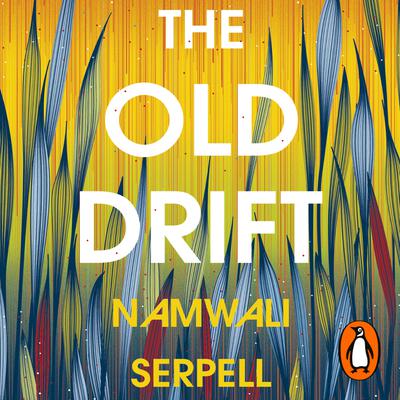
The Old Drift tells the entwined, tangled stories of three generations of Zambians. It begins in 1902, with 'Percy M. Clark, a wanderer, a brute, a cad, the forefather who started it all.' (When I first acquired this novel in Kindle form, I never got past that section.) The rest of the novel, though, focuses on more intriguing individuals, spanning the years from 1939 to 2023 -- which was, when this was published, The Future.
There are Italian immigrants, one with magic-realist hair; a blind girl who falls for an engineering student without knowing that he's black; the Zambian 'Afronauts'; sex workers, revolutionaries, immigrants, doctors... The novel is split into three sections -- 'The Grandmothers', 'The Mothers' and 'The Children' -- each with three viewpoint characters: this structure made it easier for me to appreciate each section individually, as well as the wider context in which the characters overlapped. The focus is very much on women and girls, though in 'The Children' two of the three protagonists are young men. And throughout the novel there's a strong sense of seizing possibilities, of repurposing and reworking the legacies of colonialism. A swarm of mosquitoes provides a lyrical, omniscient chorus bracketing each section. (They're quoted at the top of this review.)
I was ignorant of Zambia's history, and found this educational as well as immersive. I found myself drawn into stories that I would normally not have wanted to read, and appreciated Serpell's knack of blending historical and cultural facts with well-paced plots. And, on reflection, I think the sense of dissatisfaction I had with the final few chapters was because the time at which they're set (2023) is already in the past: the future depicted in those chapters felt, feels, as though it would be further away, maybe mid-21st century, but of course that wouldn't work with the 'three generations' structure.
Brilliantly narrated by Adjoa Andoh, with Richard E. Grant (doing Percy) and Kobna Holdbrook-Smith (doing mosquitos): Andoh produced a myriad of distinct voices for the characters, and made them easy to distinguish.
Namwali Serpell's New Yorker piece on the Afronauts can be found here.
Read because: this novel won the Arthur C Clarke Award ('for the best science fiction novel first published in the United Kingdom during the previous year') in 2020: I purchased a copy as soon as I learnt that it featured, among other narrators, a swarm of mosquitoes... but bounced off the initial 'white male colonist' section. I found the audiobook more accessible.
No comments:
Post a Comment