How strange, I remember thinking, how utterly strange were the ways of the Castilians—just by saying that something was so, they believed that it was. I know now that these conquerors, like many others before them, and no doubt like others after, gave speeches not to voice the truth, but to create it. [chapter 1]
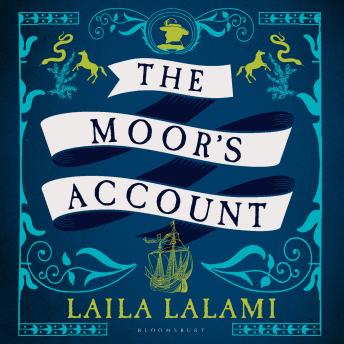
The Moor's Account tells the story of 'Estebanico', a Moroccan slave who was among the four survivors of the 600-strong Narváez expedition, an expedition to the so-called New World in 1527. 'Estebanico' is the name forced, by the Spanish, upon a trader from Azemmour, Mustafa ibn Muhommad ibn Abdussalam al-Zamori, after he sells himself into slavery to save his family from poverty and starvation. And the 'New World' is neither unknown nor uninhabited.
Within a year of the expedition landing in what's now Florida, there are only four survivors: three Castilian gentlemen -- among them Mustafa's owner, Andrés de Dorantes -- and Mustafa himself. Sometimes together, sometimes not, they travel westward, living among indigenous tribes (some more welcoming than others) and becoming healers, using a combination of folk medicine, storytelling and prayer. But the Castilians never lose sight of their primary purpose -- to find gold, more gold, all the gold -- while Mustafa's experience as a trader and then as trade goods has taught him that not everything has, or should have, a price.
Eventually, they are found by a group of Spanish slavers and taken to Tenochtitlan (Mexico City), where arrangements are slowly made for them to return to Spain. The three Castilians are asked for their accounts of the expedition: Mustafa, mentioned only once in the Castilian reports ('The fourth [survivor] is Estebanico, an Arab Negro from Azamor') and is not asked to contribute his own version of events.
Mustafa observes that the Castilians' accounts of the years in the wilderness, they omit a great deal: cannibalism, theft, rape, murder, and their Native American wives. (Not real wives, Dorantes assures him: they weren't married in church.) Mustafa has sustained himself by dreams of returning to Azemmour: but he too has married a Native American woman, now pregnant, and is increasingly disturbed by the invaders' attitude to the indigenous peoples. Dorantes' reluctance to free Mustafa, despite all they've endured together, crystallises his determination to free himself.
This felt long, perhaps because it was repetitive: tribe after tribe, misfortune after misfortune: it's under 400 pages in print. I listened to the audiobook, read by Neil Shah, and found the exaggerated Spanish accents rather grating. But it is a fascinating story, and Mustafa's perspective is quite unlike that of the Spaniards. The style is that of an Arabic travel text: dates are given according to the Islamic calendar, and places in the Old World are referred to by their Arabic names. The narrative switches between Mustafa's early life in Azemmour and his adventures as part of the expedition, each chapter entitled 'The Story of...': the parallel narratives show how Mustafa's response to the New World is shaped by his own past, and that of his people.
Two interesting resources I found when I was reading about the historical background: an analysis of the 'official' accounts with reference to the tribes they may have encountered, and Lalami's own set of resources.
Read because:I enjoyed The Dream Hotel, and when contemplating the 'Storygraph Reads the World: Morocco' prompt this drew my attention.
No comments:
Post a Comment