Several [fallen trees] could be found in a single glade, many with younger trees growing from the earth caked in their ripped-up root balls, so that it looked as though a different species was springing out of the carcass of the original. Birch from beech, Marnie thought. Holly from ash. A sense of horror overcame her. [50%]
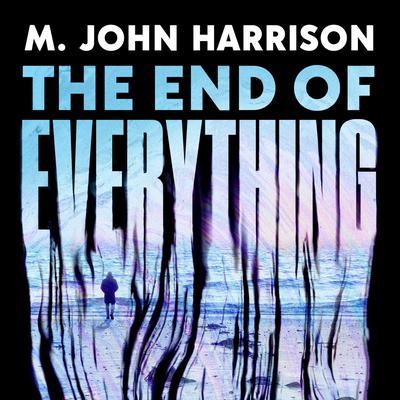
The setting is the Kent coast, some years after what may be an alien invasion by the iGhetti. Humans are waging an ineffectual war against the invaders, who are rumoured to originate from the astral plane; who manifest as 'tall writhing bursts of light'; who may not have noticed that humans even exist. There are three protagonists. Richard Tennent is a mudlark who, at the beginning of the novel, has just found an iGhetti artefact in the surf. Marnie, his aunt, lives near the beach, in the shadow of the wing of a crashed aeroplane, and may be suffering dementia. Hampson, to whom Tennent tries to sell the artefact, is a collector who obsessively chronicles his experiments with similar artefacts. (If I add that the artefact is humanoid and apparently sentient -- and the most likeable character in the novel -- you can probably imagine some of the more horrific consequences.)
But there is a great deal more than inhumanity in this novel. Europe, and possibly the rest of the world, has vanished ('How do you misplace a continent?' Marnie writes on a protest-adjacent sign) but people still queue to board ships and head out in the hope of something new. This future England (and it's a very English novel, with old men dreaming of Agincourt and the Battle of Britain) is full of people who have adjusted, not entirely without complaint, to life in the ruins, where 'bad patches' can produce timelooped experiences or affectless states of mind. The infrastructure has collapsed, and mere anarchy is loosed upon the world. And because nobody in the novel understands what is happening, neither do we -- though it's possible to piece together an extremely unsettling version of the narrative.
Intrigued by a review which mentioned the iGhetti's appearance in an earlier short story, I found 'The Crisis', which contains some passages very similar to passages in The End of Everything, though may be a different iteration of the same scenario.
Excellently read by Russ Bain: I highly recommend the audiobook, though am not wholly convinced by the voice he uses for Marnie.
Read because: I have enjoyed many (though not all) of Harrison's previous novels, and the mudlarking aspect of this work intrigued me. And now I am on my third listen...
...we pretended our scientific epistemy was still serviceable... the apocalypse seemed to withhold itself, quicky becoming just another historical continuity. That is to say, we got used to it. [40%]
No comments:
Post a Comment