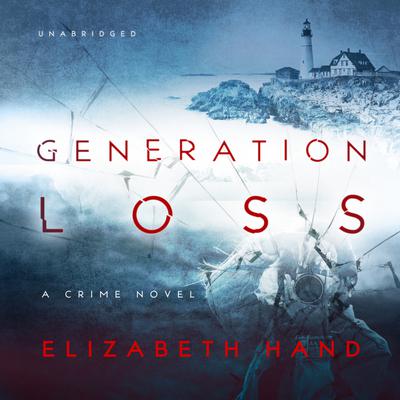
I’ve lived my entire life expecting the worst, knowing it will happen, seeing it happen. Making it happen, people used to think, then photographing it and making other people see it too.
Cass Neary works in the stock room of a New York bookshop. She was a famous photographer for fifteen minutes back in the Seventies: her book Dead Girls was a hit. But her later photography, of dead or dying punks and addicts, didn't have as much impact: a brutal assault, and a series of failed relationships (her last girlfriend died in the 9/11 attacks) have reduced her to a shadow of herself. Then an old friend tells her he's recommended her for an interview with Aphrodite Kamestos, the legendary photographer who inspired Cass. Kamestos lives on a remote island off the coast of Maine, but Cass could do with getting out of the city for a bit: she pops some speed and sets out.
She winds up in Burnt Harbor, a seaside town down on its luck. The motel is unpromising, the man in the next room gives off vibes of damage, and the owner's teenage Goth daughter, Kenzie, wants to go to New York more than anything. Cass escapes to drink at the Good Tern, Burnt Harbor's one restaurant/bar, and encounters some of the locals. Due to a hangover, she's late to Aphrodite's island the next morning -- where she discovers that Aphrodite did not, after all, ask for Cass.
There's plenty else to occupy her in Burnt Harbor. Aphrodite's aloof son Gryffin; the plethora of missing pets and people (including Kenzie, who vanished the night Cass arrived); the cold; the bleakness; the occasional mysterious, beautiful work of art; the wild animals she glimpses in the woods.
This is a noirish crime novel, quite slow -- apart from the unexpectedly mainstream climax of the murder/disappearance mystery -- and beautifully written. It's hard to like Cass, whose emotional damage expresses itself in alcohol and medication abuse, rudeness to strangers, and putting art before everything else. (Her unpleasant traits pale into nothing beside the true villain of the novel, though.) And I did appreciate her devotion to photography, her respect for the craft and her sense of light and shape.
Read because: I think someone (Mark?) recommended Generation Loss to me -- on the basis of Cass's punk days, and her appreciation of Patti Smith -- when it first came out, nearly twenty years ago. I'm glad I've finally followed up, via a cut-price audiobook. Carol Monda's laconic narration suits this novel very well.
No comments:
Post a Comment