Monday, September 23, 2019

2019/105: The Dark Angel -- Elly Griffiths

Cathbad had thought it very interesting, ‘people living in the same place for generations’, but Ruth wonders if it is actually rather dangerous. Angelo’s grandfather was a resistance hero, Valenti’s father was a fascist and Marta’s great-grandfather lies dead in the churchyard. [loc. 3180]

Ruth is contacted by Italian archaeologist Angelo Morelli, who requests her input on a puzzling burial in his home town. All expenses paid ... Ruth hasn't had a holiday for years, and is finding it hard to deal with Michelle's pregnancy: she jumps at the chance to head for the sun, with her daughter, her friend Shona and Shona's son Louis in tow.

But the little town of Castello degli Angeli is not as calm and untroubled as it initially appears. Ruth encounters hostile graffiti, finds a wolf skull outside her door, and becomes aware of tensions dating back to the Second World War ... and perhaps even further into the past.

There is a murder, an earthquake, and the sudden appearance of Harry Nelson, who really should not be abandoning his family in Norfolk just when Mickey Webb, a murderer who vowed vengeance on Nelson but has since apparently reformed, is released from prison.

I didn't find this novel especially satisfactory, though it does resolve one plot arc in a truly surprising way. The murder plot is a tangled one, and the resolution is rather hasty. There is a nice sub-plot about a refugee, and the culture and ambience of Italy is evocatively described. A pleasant enough read, but not one of the best in this series.

Saturday, September 14, 2019

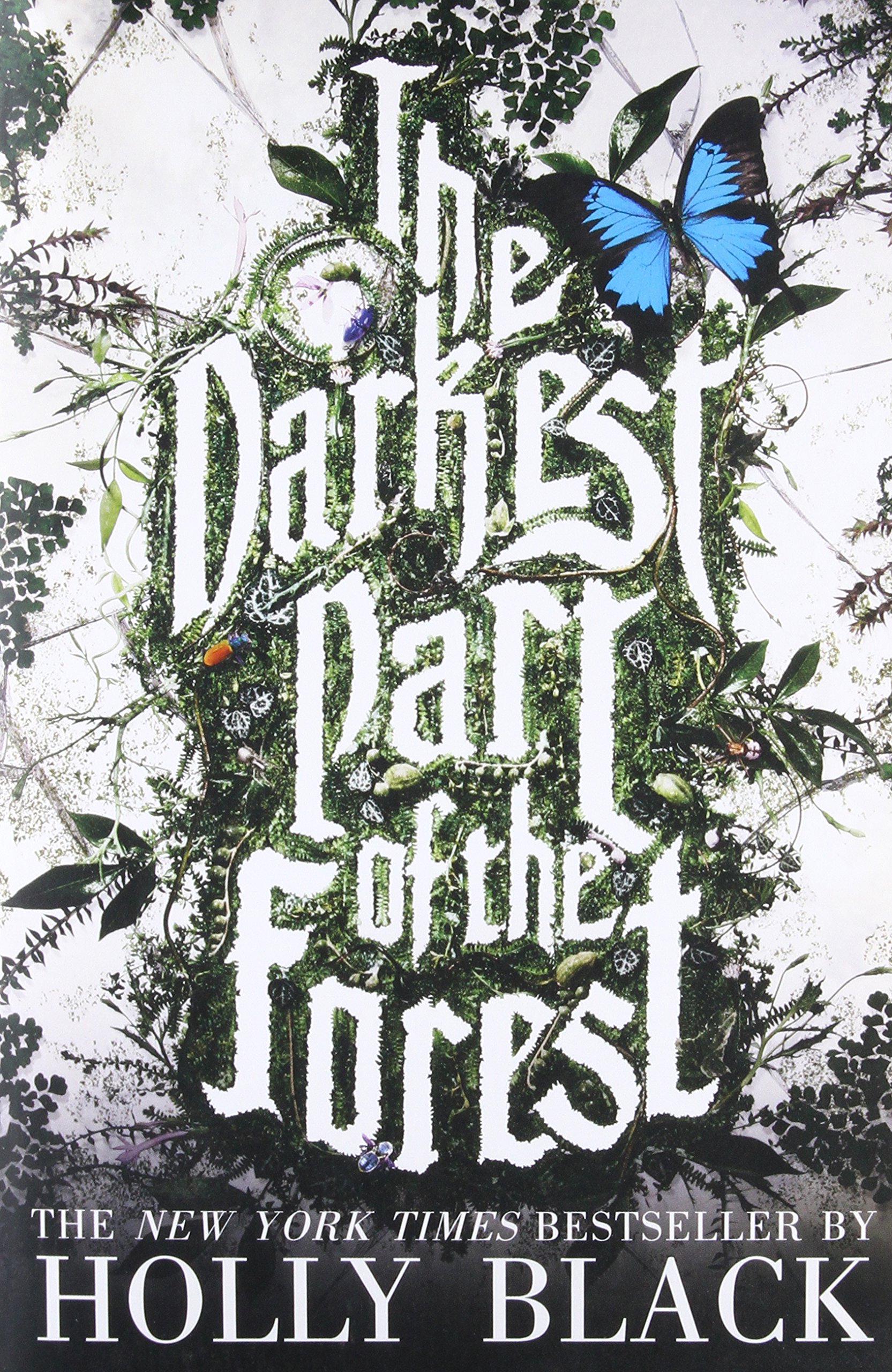
2019/104: The Darkest Part of the Forest -- Holly Black

It was too much. But there was no one else, so it couldn’t be too much. It had to be exactly enough. It had to be what she could handle, and she had to handle it. [p. 189]

The small town of Fairfold is unique: it borders on the territory of the Folk, and features a glass coffin containing a sleeping elven prince. Hazel Evans and her brother Ben were both in love with him as children: Ben dreamt of saving the prince with his music, while Hazel wanted to be a knight. Left to their own devices by affectionate but feckless parents, the two hunted and slew the nastier faeries (the Folk regard tourists as fair game, though -- strangely -- there are no warnings, no travel advisories) and ran wild in the woods. And then Hazel made a bargain ...

There are some excellent characters in this novel, especially Jack, the changeling of Hazel and Ben's friend Carter. Carter's mother realised her baby had been swapped for a faerie child; did the traditional thing with hot iron until a faerie woman showed up with Carter; and then declared that she'd keep them both. Jack is one of the crowd, a part of Fairfold life; but Saint John's Wort makes him itch, and so does cold-shaped iron.

Hazel is interesting because she is profoundly damaged and doesn't recognise it. As children sometimes do, she accepts the monstrous as normal: her memories of killing monsters -- and of seeing them kill -- are all the more unsettling because they happened when she was very young. Before she made that half-remembered bargain with the Fae.

But things are changing. One morning the townsfolk discover the wreckage of the glass coffin; and a monster has emerged from the heart of the forest to threaten Fairfold in broad daylight.

There's a lot about memory in this novel, and about monsters. There is romance, and horror, and more than one dysfunctional family. There are people of colour, queer characters and a backstory that's only slowly revealed. But at the heart of it is Hazel, coming to terms with the promises she's made, her own desires and the notion that perhaps she doesn't have to save the whole world by herself.

Thursday, September 12, 2019

2019/103: Gilded Cage -- K J Charles

"...you have my word of honour I will behave as a gentleman.”
“I’ve met gentlemen.”
“Good point. I will behave as a gentleman ought to.” [loc. 1705]

Susan Lazarus, fiercely independent enquiry agent, is not best pleased to discover her childhood friend James (better known as Templeton Lane, one-half of the notorious jewel thieves the Lilywhite Boys) hiding in her rooms. Templeton has been surprised mid-crime, more or less red-handed, and is now sought by the police in connection with a double murder in Mortlake, which he claims he didn't commit. Why yes, that is a priceless opal necklace in his pocket (although he is undoubtedly also pleased to see Susan, despite her chilly disdain at their last encounter).

Templeton's got nothing left except the last vestiges of his pride, and a dangerously hot temper. His friends Jerry and Stan have -- quite rightly -- told him to clear off and stop endangering them. (Jerry, of course, has lost his nerve since he met Alec Pyne; or so Templeton tells himself.) He turns to Susan for help clearing his name, because she's the most intelligent person he knows, and she has a strong sense of justice. The two also have a painful shared history, but they are both determined not to let the past get in the way of the case.

Susan, though, has already told Templeton he owes her a debt: and if he can pay his dues, then perhaps there might be more to gain than simple exoneration.

This is a romance of equals, who respect one another's abilities and skills (reluctant though Susan might be to admit out loud that Templeton has any redeeming qualities) and who are both fearsomely competent. Another thing they have in common: they've both turned away from love, friendship, family, because it's dangerous to rely on others for one's happiness.

Fortunately, they are sensible adults, and they are capable of communication. Can Templeton discover why Susan burnt his letters unread? Can Susan admit that she may have been misled, or even, just possibly, wrong? (Will Jerry stop being an arse?)

There are some intriguing snippets of Vane family history (that slender, elderly man who taught Templeton the art of silent footsteps!) and a glimpse into the home life of Justin Lazarus and Nathaniel Roy. But the focus here is on Susan and Templeton -- Susan and James -- and their extralegal adventures. Often very funny, generally well-paced (though it does all become quite frantic towards the end), surprisingly educational, and emotionally satisfactory. Susan is a delight, and I would like to meet her in further novels.

Tuesday, September 10, 2019

2019/102: Starve Acre -- Andrew Michael Hurley

Richard wondered if the hare in some way felt as he did that spring was always bestowed. That it was an invitation to come and watch the world moving and be among its tremors. Here in the field, those first shocks of the season were starting now. [loc. 1005]

Originally published under the nom de plume of Jonathan Buckley, by the Eden Book Society [CAUTION: rabbit hole ahead], Starve Acre has been reissued under Hurley's name, with revisions. (I would be fascinated to be able to compare the two editions: here's a review by someone who has read both.)

Richard and Juliette have left the city to live in Starve Acre, Richard's family home, out in the Yorkshire Dales. They'd dreamt of an idyllic country childhood for their son Ewan, and for the other children they planned to have: but now Ewan is dead. Juliette is certain that Ewan is still with them in the house, making contact: through a friend, she has arranged for a spiritualist to visit. Richard, a lecturer in History, believes that 'the sum of human existence [is] collagen and calcium phosphate' [loc. 559]: he is haunted only by memories. True, Ewan was ... disturbed in his last months of life. He heard a voice in the dark, and sometimes did its bidding. But really, Richard thinks, he was only five. It was just a difficult patch.

Richard is excavating the field after which Starve Acre is named, a field where nothing grows. Local lore has it that this is because it was the site of the Stythwaite Oak. Richard is inexplicably keen to find some trace of the oak -- roots, branches ... In parallel he's performing a kind of excavation in his late father's study, a jumble of books and papers, where he finds old woodcuts depicting young men hanged from a bough labelled Olde Justice.

Then, in the field, he finds the skeleton of a hare, and brings it home to Starve Acre: and something starts to happen that he has no framework for thinking about.

This is an unsettling short novel, told from the viewpoint of a character who dismisses the experiences of those around him, while revising his own memories to a kinder shape. It gradually becomes clear that Ewan was not simply going through a difficult patch; that something may be altering Richard's perceptions; and that Mrs Forde's caution -- 'whatever it is you've brought into your home, get rid of it' -- was not the 'consummate performance' that Richard mocked, but a sincere warning.

Hurley's descriptions of the changing seasons are exceptional, especially his evocations of the advent of spring after a long winter: the damp smell of ferns, the 'flinty noise' of sparrows in the hedgerows, the astonishment of birdsong. It's all the more powerful when set against the disintegration of Richard and Juliette's home, and the shocking final image is like a nail driven home.

I read this because The Loney resonated with me. Starve Acre is a simpler story, more traditionally Gothic, but Hurley's prose elevates what might be a straightforward horror story into something mythic.

Thanks to NetGalley for a free advance review copy, in exchange for this honest review.

Monday, September 09, 2019

2019/101: One by One They Disappeared -- Moray Dalton

“The Prince of Darkness was a gentleman.”
“Oh, these foreign noblemen are often wrong ’uns,” said Collier, who had not quite caught the title. [loc. 1379]

I can't give an objective review of this novel, because I found one aspect of it desperately upsetting.

Mr Pakenham is a genial, elderly American millionaire, who makes an annual pilgrimage -- accompanied by his cat Jehosaphat -- to a London hotel, where he hosts a dinner for a small group of wartime friends. Pakenham, and Jehosaphat, survived the torpedoing of the Coptic in the First World War: he credits his fellow survivors with saving his life, and has made them all beneficiaries of his will. But on this occasion, only two of the men turn up: several of them have died recently.

Inspector Collier of Scotland Yard, having encountered Pakenham by chance, is intrigued and touched by his story -- and suspicious of the sudden deaths. He begins to investigate, and encounters the highly suspicious Mr Freyne, the charming Mr Stark, and Mr Stark's ward Corinna, who is Hapless.

I bought this book because a friend recommended it, and added 'excellent cat'. The cat is indeed excellent.

Spoilers in white text
After Pakenham and Jehosaphat were parted by plot, I sentimentally looked forward to their reunion. Jehosaphat was instrumental in unmasking and foiling the villain, and played a key role in the resolution.

And then, almost as an aside, we discover Jehosaphat's fate. Pakenham tells Collier: "I want to thank you for letting me have my poor cat’s body. Maybe they did the right thing when they shot him, but it’ll be a long time before I get over it. Jehosh and I were never parted until the time came for us to part forever." [loc 2364]

Maybe this is a period-typical attitude to animals: the novel was published in 1929. But killing a cat, presumably because he scratched the villain and indirectly caused said villain's death? I was in tears, and am still upset about it: part of this is that it triggered some bad memories, but part is just the sheer unnecessary nastiness of it.


And now I can't really remember much of the detail of the book, though it was well-written. I think I found the identity of the villain somewhat predictable, and Corinna not as hapless as initially feared. But ... no.

Sunday, September 08, 2019

2019/99: Lanny -- Max Porter

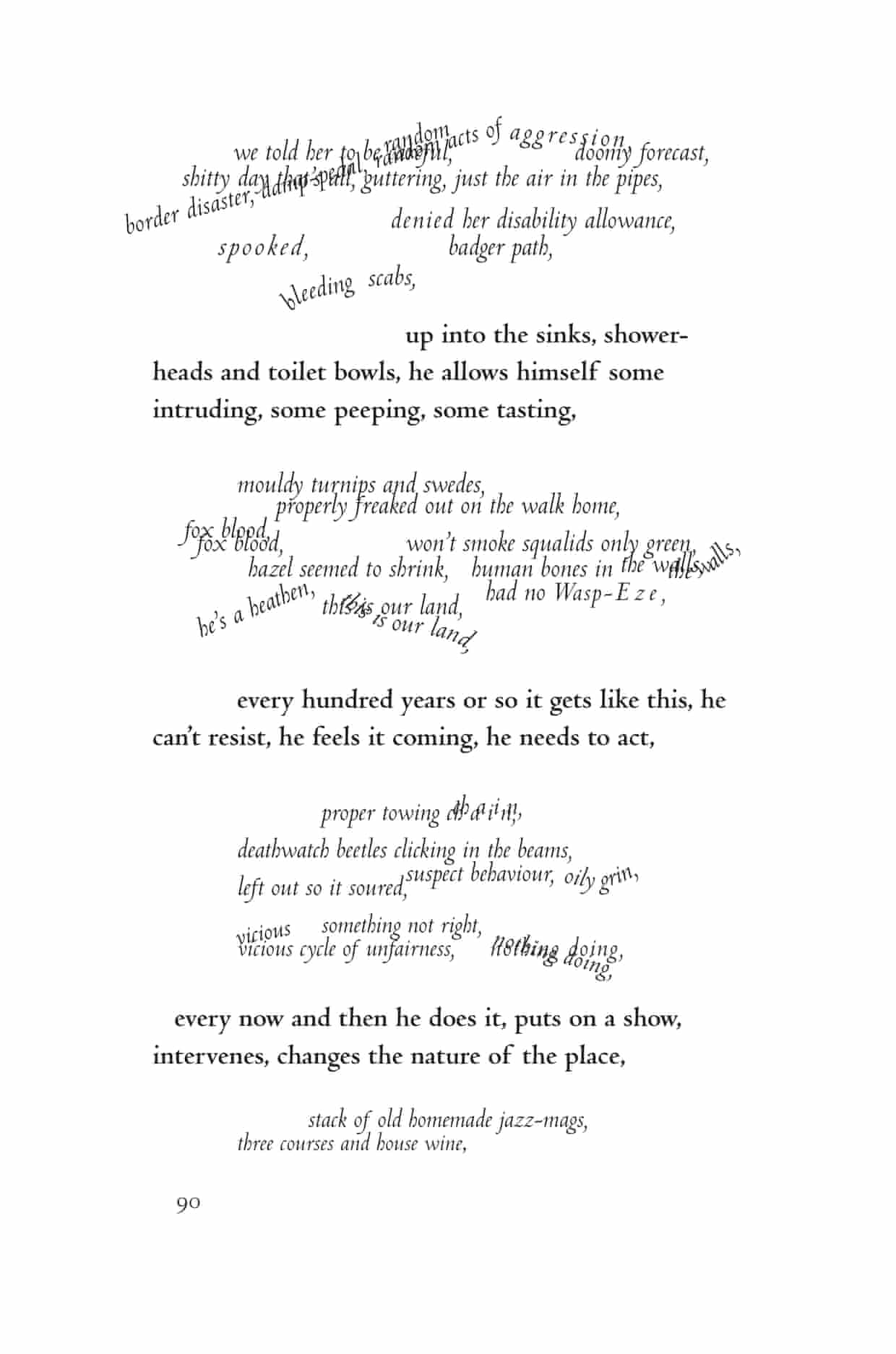
He wants to kill things, so he sings. It sounds slow-nothing like tarmac bubbles popping in a heatwave. His grin takes a sticky hour. Cheering up, he chatters in the voice of a cultured fool to the dry papery wings and under-bark underlings, to the marks he left here last year, to the mice and larks, voles and deer, to the quaint memory of himself as cyclically reliable, as part of the country curriculum. He slips through one grim costume after another as he rustles and trickles and cusses his way between trees. He walks a few paces as an engineer in a Day-Glo vest. He takes a step in a dinner suit, then an Anderson shelter, then a tracksuit, then a rusted jeep bonnet, then a leather skirt, but nothing works. ... He clomps through the wood, wide awake and hungry for his listening. [p. 3]

I first attempted to read this as part of a 'green man' triptych, along with The Green Man's Heir and Silver in the Wood. However, it is not a book that can easily be read on a Kindle: the playful typography is rendered, in the ebook, as images rather than text.

... And so I bought the first hardcover book I've purchased for a while.

That wild typography represents the 'English symphony' of human conversation (or perhaps thought) in a Home Counties village. This symphony is savoured by Dead Papa Toothwort, a protean genius loci who's been around since the Domesday Book, Dead Papa Toothwort roams the village, sometimes wide as an acre, sometimes smaller than a flea, shifting from form to found form according to the materials in his vicinity. And the voice he savours most is that of Lanny, child of Jolie (who's working on a gory thriller) and Robert (who commutes). Lanny is most at home in the woods and hidden places of the village, building dens and leaving notes for whoever might find them; his parents love him but don't understand him (though Jolie, at least, values his sweet weirdness). Paul, a renowned elderly artist who's retired to the village, is asked by Jolie to do art with Lanny, and the two hit it off.

Dead Papa Toothwort is not a tame genius loci. The villagers may be fond, even proud, of their local legend ("he fondly remembers how much more frightening he was when the village children drew him green and leafy" [p. 45]) but Dead Papa Toothwort is a force of nature, and of change. "...every now and then he does it ... changes the nature of the place" [p. 90].

When Lanny goes missing, the village 'symphony' turns nasty, casting Jolie and Robert as neglectful parents, Paul as a paedophile, Lanny himself as something unnatural. The 'ecosystem of voyeurism' is in full flood. But Dead Papa Toothwort has not finished with Lanny, nor with the three adults, the three incomers.

Max Porter's writing is delicious, rollicking along gleefully with sheer joy of words and a disinclination to spare our delicate sensibilities. (Dead Papa Toothwort is as likely to take the shape of a pink-strangled lamb or a used condom as a mess of ivy or a bark-armoured form striding towards the kissing gate.) The voices of Jolie, Robert and Paul are distinctive, but frankly dull when set beside Dead Papa Toothwort's relish of language. While the actual story of Lanny is relatively slight, Porter's dissection of English village life, with its insularity and rumour and pettiness -- as well as kindness, creativity and wisdom -- is thoughtful and unsentimental. It's not coincidence that Paul is driven to destroy a postcard of an Eric Ravilious print that shows an idyllic past.

Rich, unnerving, physically and metaphorically lovely. Now I need to read Grief is the Thing with Feathers ...

2019/100: The Memory Game -- Sharon Sant

I should go somewhere, but I can’t seem to leave my corpse alone. [p. 3]

David is fifteen when he's killed in a hit-and-run accident. By the beginning of The Memory Game, he's a ghost, and he doesn't understand anything.

Only one person can see him, and she's the least popular girl at school. (The girl he has a crush on, Ingrid, seems to be starting a relationship with David's best friend.)

David is not initially a very likeable character. He had a terrible argument with his mother the evening before he died, and he's been as much of a bully to Beth, the girl who can see him, as any of his peers. But gradually it becomes apparent that things were far from perfect in his life; and they're far from perfect in Beth's, too.

Some interesting small-town dynamics here, not least the medium who can't (won't?) see David, but soothes her clients with platitudes about their dear departed; the bigotry and rumour that fuel the town; the older kids who everyone knows are up to no good; the tendency to look the other way, to avoid getting involved, even when it's a matter of life and death.

I wasn't satisfied by the ending of this novel: it seemed that the whole 'purpose' of David's life-after-death was also the cause of something that wouldn't have happened if he hadn't been a ghost.