I’m afraid this is going to be the last moon mission for a long time.
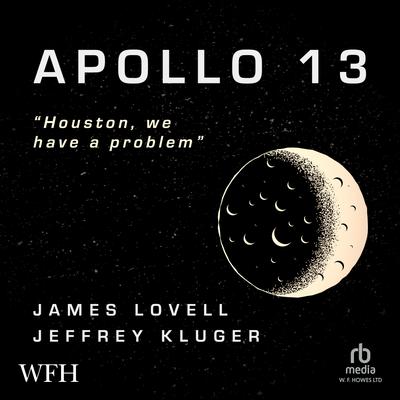
Initially published as Lost Moon and retitled to tie in with the movie Apollo 13, this is Jim Lovell's account -- with Jeffrey Kruger's wealth of background research and synthesis -- of the NASA mission that would have been the third Moon landing. It's not just a minute-by-minute account of the accident and the return, both on board the spacecraft and back at Mission Control, but also a biography of Lovell: there are vignettes featuring other people impacted by the events (such as the spacecraft recovery specialist aboard the USS Iwo Jima), and a detailed account of Marilyn Lovell waiting at home with their children, supported by friends and neighbours.
I found this compelling listening: it's extremely well paced. The technical details of the damage to the Service Module, and the ingenious workarounds developed by crew and Control, are explained clearly for a non-technical audience. The constant stress of the four days after the explosion (which vented most of the oxygen to space, and forced the three-man crew to take refuge in the Lunar Module which had been designed to support two men for two days on the surface of the Moon) is clear, but there's never false drama.
The crew's levelheadedness did occasionally falter, but only in throwaway comments. (I suspect Kruger relied heavily on the log transcripts.) And I found the dogged perseverance of Mission Control uplifting and inspirational. It's also amazing to me that the mission was completed -- not only on the ground, but in the spacecraft -- with less processing power than my smartwatch. (See Reddit for discussion).
Narrated very well by Fred Sanders, whose voice I found pleasant and who injected humour into the lighter interludes, and didn't speed up when things became tense.
Read because: I don't quite remember this happening (unlike some of my friends), but it's been part of my cultural background for most of my life. I realised I knew very little about the disaster, though I did know it hadn't ended in tragedy. And the NASA space program, at its height in the '60s and '70s, is exciting.
No comments:
Post a Comment