Wednesday, May 13, 2020

2020/053: Slippery Creatures -- KJ Charles

Ought he apologise for coming in his mouth? Would this be a good moment to restart the conversation about where Kim had learned to use a knife? Thank God they were British. He took a deep breath. “Cup of tea?” [p.72]
Will Darling is a veteran of the First World War, down on his luck and without prospects -- until his friend Maisie suggests that he contact his elderly uncle, who promptly expires, bequeathing Will his disorderly bookshop. Which would seem to be remarkably good fortune, except that Will is pestered by various unsavoury parties who believe he has information that they want. Perhaps his mild-mannered bookselling uncle was involved in a more dangerous business ...

Enter Kim Secretan, jaded aristo and (as Will quickly discovers) a good man to have at your back in a fight. Easy on the eye, too. But can Will trust him for more than ten pages? The answer is almost certainly 'no'. Except that Kim keeps revealing layers of himself, unexpected skills, and -- dash it -- a charming fiancee, Phoebe, who wants what's best for Kim, her best friend.

It's a fast-moving plot, full of reversals and abrupt wrong-footings, redolent of pulp thrillers in the Buchan mould: secret societies with handy identifying tattoos, a traitor in the War Office, several elaborate schemes for conveying secret messages, and moderate violence. Being a novel by K J Charles, it also features anti-Establishment sentiments, rage at the Government (how very like the home life of this reader, et cetera) and competent people falling reluctantly in love (or something like it). Will is stubborn, loyal and not afraid of violence: Kim is slippery and untrustworthy but sound at heart.

I didn't warm to this quite as much as some of Charles' other pulp-inspired works. Perhaps it was the lack of a supernatural element, as in Spectred Isle: perhaps the repeated reversals (and Will's justifiable refusal to give Kim the benefit of the doubt) felt a little too emotionally bleak: perhaps Will's cynicism was just a little too familiar from the inside of my own head, in these dark days. But I did enjoy the novel, and I'm looking forward to the next in the planned trilogy.

Monday, May 11, 2020

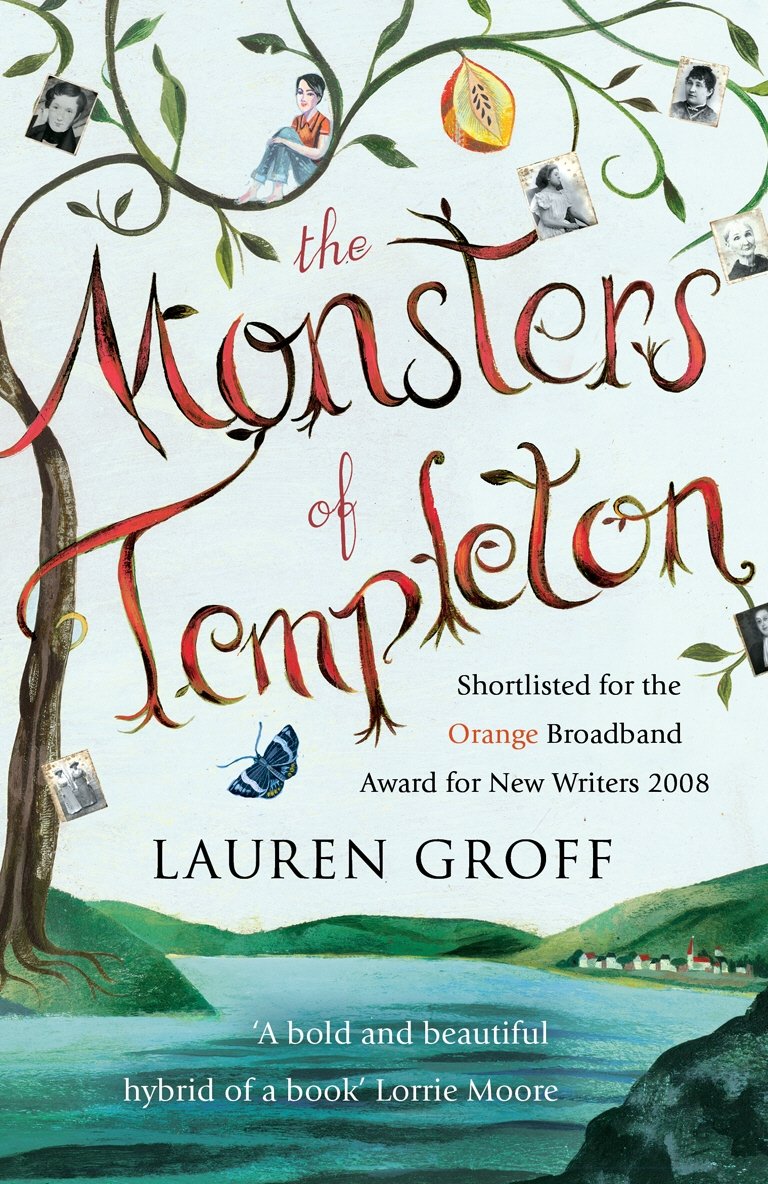
2020/052: The Monsters of Templeton -- Lauren Groff

I managed a glimpse of myself, and saw my features were dark and veiled. I knew then it was my good ghost, the indirect watcher over my life, that had for now slipped around me. I’d become the yolk in an egg; I’d become one human bone, my body at the marrow and the ghost surrounding it, tense as flesh. [p. 304]

On the day that Wilhelmina -- 'Willie' -- Upton returns to her hometown, Templeton, the corpse of a prehistoric beast floats to the surface of the lake. Willie is saddened by the death of this legendary creature, but she has other things on her mind. Firstly, she is pregnant by her academic supervisor, Dr Primus Dwyer, and secondly, her mother Vivienne has finally given her a hint about her father's identity. Vi had always claimed Willie was the result of some drug-stoked hippie orgy, but now she reveals that Willie's father is a Templeton man, someone who's distantly related to Vi through the tangled family tree of the Temples and Averells. Willie sets out to research the family history, and discovers some surprising connections: she also encounters friends and acquaintances from her childhood and teenage years, including the awkwardly-monickered Zeke Felcher. Meanwhile, her mother has turned to Christianity, and to the Reverend John Melkovitch, whom Willie refers to as Reverend Milky.

This is a beautifully-written novel, and one I wish I'd read in paper form: the historical chapters, revealing details of various Temple/Averell generations long gone, are punctuated by images of Willie's family tree, altered each time she learns something new. These, and the photographs and sketches of Willie's forebears, are not well-suited to Kindle reading.

But the prose is glorious in whatever format it's read. The family backstory is carefully layered, with echoes and old secrets aplenty: there are bastard children, wastrel sons, slavery and servitude, arson and blackmail, and an ancient curse. Some things recur through the generations: the monster in Lake Glimmerglass, the ghosts of Averell Cottage, and Aristabulus Mudge, the apothecary / herbalist who provides rat poison and contraception to Willie's ancestors and 'invigorating' herbs to Willie's father.

The Monsters of Templeton is, in a way, a work of literary fanfiction. Groff grew up in Cooperstown, hometown of novelist James Fennimore Cooper, and her Jacob Franklin Temple -- the town's most famous son, author of many novels including one that helps Willie and her friend Clarissa decode a cryptic comment in an old letter -- is surely a homage. She borrows some of Cooper's characters, too, to people the history of Templeton: Natty Bumpo, Cora Monro, Uncas ... But it's not an uncritical borrowing. Willie remarks on the shallowness of Temple's female characters: generations of Willie's female ancestors, revealed in letters and journals, have or seize agency, make the decisions that shape the family tree.

Groff's original characters shine. Willie's ancestors are vividly imagined, their loves and hates distinctive and yet building a story about Templeton and about the family. There are monsters male and female, in the documents Willie pores over and in the present day (the slimy Primus Dwyer made me grind my teeth: and also flinch, a bit, because I know his sort). If I've a criticism, it is that there is not enough about the creature in the lake: not until the very end of the novel, when it feels like a balm. I'd have welcomed its presence earlier in the story, and not merely as a half-glimpsed shape or a disturbance in the water.

Wednesday, May 06, 2020

2020/051: Network Effect -- Martha Wells

Ratthi commented ... “Anyone who thinks machine intelligences don’t have emotions needs to be in this very uncomfortable room right now.” [loc. 2428]

I've read and reread the Murderbot novellas (All Systems Red, Artificial Condition, Rogue Protocol and Exit Strategy) several times, and recommended them to many. Now there is a full-length novel! And I enjoyed it very much.

The structure's more complex than that of the novellas, with two distinct timelines (the second presented as the contents of a file named 'helpme') and the introduction of other narrative voices*. There are characters from previous episodes, settings both planet-side and in space, and a whole new batch of trashy media shows.

Murderbot is acting as a security consultant for Preservation Station, Dr Mensah's homeworld, which is resolutely resistant to the Corporate Rim. Returning with the team -- which includes Dr Mensah's daughter Amena -- from a research mission, Murderbot and friends are abducted by a team of grey-skinned individuals who seem to have commandeered the the Perihelion, a ship that looks horribly like Murderbot's old friend ART (Asshole Research Transport). The grey-skinned captors aren't forthcoming about their motives, but they have a destination in mind. There are Corporation Rim intrigues, possible alien remnants, an interesting depiction of the economics of terraforming, and more discussion of relationships than you might expect. (Amena is such a shipper.)

Network Effect does what it says on the tin: it explores networks, hardware and software and bioware, social contacts (one aspect of the plot concerns contagion, which I found unsettlingly relevant), interpersonal bonds of obligation and friendship and loyalty. Murderbot experiences two life-changing, life-affirming experiences, cementing both its sense of personhood and its location in the network of friends and allies (mission-assists!) which sustain it. It's already an independent agent at the beginning of the novel: by the end, there is a sense of maturity. Perhaps this is a coming-of-age novel as much as anything.

Also of interest is the way that Murderbot interacts, non-violently, with another SecUnit, and begins to wonder if perhaps it is not like the other bots after all: if the anxiety and depression and loneliness are not intrinsic to the SecUnit build. I think this is a really significant development, and perhaps one that Murderbot wasn't psychologically capable of recognising earlier. And it makes me feel a lot better about all the SecUnits who haven't hacked their own governor modules ...

I balked at one word! The 'little' in 'you little idiot', which is absolutely a term of affection in this context, but felt completely wrong from person A to person B.

The finale of the novel sets up many intriguing possibilities for future Murderbot tales. I am hopeful.

* ish.
Spoilers in white: highlight to read:
ART! ART's coded message and the way in which it's coded!
And the splendour of this line, on reread:
The good thing about being a construct is that you can’t reproduce and create children to argue with you. [loc. 1393]

Sunday, May 03, 2020

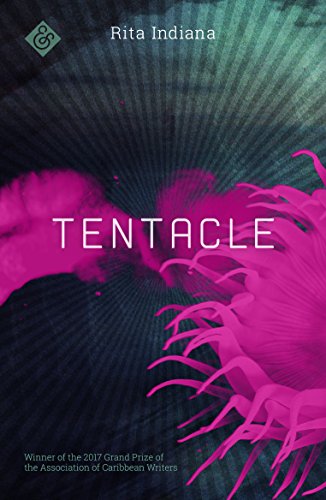
2020/050: Tentacle -- Rita Indiana (trans. Achy Obejas)

... the cult of Olokun, the most mysterious of the orishas, about whom even her most cooperative sources had kept quiet. According to the letter, black Cubans called a certain marine creature Olokun. It could travel back in time, dude, very Lovecraftian. [loc. 1248]

This short novel is set in three distinct time periods: the 2030s, when a trio of ecological disasters have rendered the ocean off Dominica a lifeless sludge, Chinese robots clear the streets of vagrants, and the president is advised by a santera, Esther Escudero, who is also the servant of the sea goddess Yemaya; the 1990s, when wealthy philanthropist Giorgio Menicucci hosts an artists' workshop and founds an institute of marine biology; and an indeterminate period in the 17th or 18th century, when buccaneers form a community on the coast of Hispaniola.

These three disparate periods are linked by Acilde Figueroa, who is introduced as Esther Escudero's housemaid. Acilde is a former sex worker plucked from the streets by Esther's factotum Eric, who perceives in this scrawny androgynous teenager a possible saviour. Transformed by the gender-reassignment drug RainbowBright, and simultaneously by an anemone rumoured to have mystical powers, Acilde (who has always identified as male) becomes a man in body -- and pronouns -- as well as in spirit, and is metaphorically 'reborn' in an underwater grotto in the 1990s.

In a parallel narrative, macho (and homophobic) artist Argenis is doomed to be a call-centre psychic until he quits his job (well, is sacked) and is taken up by the mysterious Giorgio Menicucci. After a diving accident, in which Argenis has a massive allergic reaction to anemone stings, he finds himself caught up in vivid dreams of buccaneers, art created with cows' blood, and hidden gold. Cut off from 'reality', Argenis can accept his own desires and urges.

There's a lot going on in Tentacle, yet it didn't capture me: I think this was because none of the characters felt quite real to me, or possibly just because I didn't or couldn't empathise with them. (I admit that the sex, violence and casual cruelties had a distancing effect, too.) There are such interesting ideas here -- gender and identity, cyberpunk interfacing with religion and black magic, the paradox of having access to 2030s information from the 1990s -- but I think I might have enjoyed the exploration of them more if the novel had been longer, with more description and character development. As it is, it felt short and snappy, like a fast-moving film or a graphic novel: fascinating, but not satisfying.

I read a review which indicated that the translation has transformed the text: I found the note on pronouns especially salient, as Acilde is misgendered until the RainbowBright / anemone incident:
The nature of the Spanish language makes it easier to omit pronouns, which Hernández often does when referring to Acilde. Obejas, on the other hand, is forced to choose feminine and masculine pronouns, respectively, before and after Acilde’s gender-reassignment.

Read for the 'By an LGBTQ+ Author' rubric of the Reading Women Challenge 2020.

2020/049: The Twisted Ones -- T Kingfisher

I tried to make a face like the one on the nearest carving. Its lower jaw was distended like a snake about to swallow and its eyes bulged. “See, ’ook…” I opened my eyes and mouth as wide as I could and wider, wider, wide enough to eat the sun this is the one that puts the stars out when the shadows go over them this one’s eyes can see in the gray that’s left behind after even the darkness is eaten. Oh shit. I tried to close my mouth and it didn’t want to close. [loc. 1210]

Melissa, known as Mouse, heads off to the wilds of North Carolina after a bad breakup, with only her dog Bongo for company. Mouse's grandmother, who nobody liked, has died, and Mouse's dad isn't up to clearing out the house. Turns out Grandma was a hoarder -- there is, for instance, a whole room full of creepy dolls, and the porch is stacked with an intricate tetris of furniture, appliances et cetera -- and the house is not a pleasant place to be. Mouse's phone is playing up (a software update will be available soon!) and she has only the radio, Bongo and her own imagination for company. She has not loaded her e-reader (rookie error!) so ends up reading the journal she finds in a drawer, which belonged to her grandmother's husband Cotgrave. This does not soothe her, because Cotgrave's wild tales of a hidden 'Green Book' and strange folk in the woods are corroborated by the folk from the more-or-less-abandoned commune down the road.

This is a genuinely terrifying novel, where the terror comes from Mouse's growing understanding: oh, so that's what those knocking sounds were; oh, that isn't just an injured deer; oh, here's a message pleading for help ... To be honest, the house itself also unnerved me (I grew up in a hoarder's house, though not to that extent, and still have bad memories of the post-mortem clear-out).

Against the terror, Kingfisher sets a lot of strong positive relationships. Foremost is Mouse's bond with Bongo, who she won't abandon even when it might mean her own sanity. There is also her growing friendship with, and reliance upon, the colourful Foxy, a weathered lady with a penchant for bright colours, who lives in the commune and won't let Mouse face the terrors alone. (Thinking about it, the bright colours probably help a lot.)

And there are several layers of story here. First, obviously, is Mouse's narrative. Then there's the 'Green Book' alluded to in Cotgrove's journal, which Grandma has allegedly hidden somewhere in the house. Cotgrove writes down what he can recall of this book: genre-savvy readers will recognise Arthur Machen's The White People, though I did not make the connection until Kingfisher's afterword. And Mouse is an editor and proof-reader, so she's criticising the story -- the stories -- even as she encounters the horrors. "... my job was to know the shape of stories and help other people hammer them into place, and I guess I thought on some level that when I got to the last room, there’d be some kind of reward for it." [loc. 2818] That meta-narrative gives her some leeway in rationalising and explaining actions which belong in the 'do not do this' column of genre convention: 'don't go back for the cat or aliens will eat you', et cetera.

I enjoyed this, in a shivery way, because Mouse is a likeable and vulnerable heroine who prioritises her dog's well-being, doesn't pretend to have loved her grandmother, and is horrified by Cotgrove's grammar. It's a darker novel than Swordheart or Paladin's Grace, and there's less humour: but Kingfisher's inventiveness, characterisation and unpredictable plot twists make this more than just plain horror.

Saturday, May 02, 2020

2020/048: Women and Power -- Mary Beard

Medea, Clytemnestra and Antigone ... are not, however, role models -- far from it. For the most part, they are portrayed as abusers rather than users of power. They take it illegitimately, in a way that leads to chaos, to the fracture of the state, to death and destruction. They are monstrous hybrids who are not, in the Greek sense, women at all. [p. 59]

Read for the 'A Nonfiction Title by a Woman Historian' rubric of the Reading Women Challenge 2020: read, also, because on my last outing before lockdown I went into a bookshop and this was gleaming up at me, beautiful geometric blue / gold / black cover. And read because I am a woman and a feminist and have an interest in classical history and literature.

Mary Beard starts with Telemachus telling his mother Penelope to shut up ("speech will be the business of men"), and she goes on to discuss the many and varied ways in which women have been silenced, and deprived of power, through the centuries. I was particularly struck by the discussion of Medea, Clytemnestra and Antigone: characters from classical Greek drama who are typically presented, these days, as heroines who rebel against injustice, but who were originally intended as illustrations of the wrongness of women seizing power.

I was also repulsed by the ways in which Perseus' murder of Medusa has been repurposed in modern-day politics, most notably an image of Trump as Perseus with Hillary Clinton's face replacing Medusa's. "It is also true that one satiric stunt on US television featured a fake severed head of Trump himself," notes Beard [p. 76], "but in that case the (female) comedian concerned lost her job as a result."

This book, comprising two talks given in 2014 and 2017, already feels a little dated: but there is an interesting observation on Theresa May having been set up to fail, which seems entirely credible.

An interesting and thoughtful book, with an afterword from Mary Beard about how we define and redefine our own experiences of sexual abuse -- 'self-empowering narratives' -- which made me think hard about some incidents in my past.

Friday, May 01, 2020

2020/047: Star Witch -- Helen Harper

"You saw what happened yesterday. I have to be careful not to overdo it." It sounded like the perfect excuse for not trying very hard. I’d hallucinate every day of the week if it meant I didn’t have to put in too much effort. [p. 219]

Second in the 'Lazy Girl's Guide to Magic' series, which started with the enjoyable Slouch Witch. Having renewed my Kindle Unlimited membership, and being in need of something cheerful, this seemed a great time to read Star Witch ...

In this volume, Ivy Wilde is sent undercover by the Order to investigate a gruesome magical murder on the set of a magic-oriented reality TV show, Enchantment. Ivy starts off as a runner -- despite the unpleasant connotation of physical exertion -- but ends up as a contestant, typecast as The Bitch. Watching over her -- and vice versa -- is sapphire-eyed Order magician Raphael Winter, who has been remarkably cool since the events at the end of Slouch Witch. But Ivy is not deterred, because Rafe has exhibited signs of jealousy, which must mean he cares. Right?

Meanwhile Brutus, Ivy's feline familiar, is doing what cats do best, i.e. sucking up to someone else. (I do like Brutus. I wish he would talk more to Ivy though.)

I wasn't quite as convinced by the events, and especially the emotions, in Star Witch as in the previous volume. Ivy takes an immense risk without really arguing about it; and she doesn't seem to be as good at communication as before. There's a certain amount of romantic development, but it felt rather like an afterthought -- the murder mystery, which was really quite twisty, was foregrounded.

Despite the murder and villainy, though, this was a fun read. Sheep! Potions! Backstabbing in the metaphorical sense! And a suitable put-down for Ivy's slimy ex... I'll probably grab the third one soon (though I hope it's better proof-read: there are a lot of missing words, scrambled sentences et cetera herein.)