Friday, November 28, 2025

2025/191: The Future Starts Here — John Higgs

The real problem is that a species that lives inside its own fictions can no longer imagine a healthy fiction to live inside, and this failure of the imagination stops us from steering towards the better versions of our potential futures. [p. 19]

The Future Starts Here: An Optimistic Guide to What Comes Next is a cultural analysis of how we view the future, focussing very much on the positive. The book ranges from an overview of why colonising Mars is a daft idea to explorations of the Knebb rewilding project, of natural versus artificial intelligence (and why Higgs feels his cat is smarter than Alexa), and of the ways in which virtual reality can be more than just entertainment. Higgs explores ideas such as reality tunnels, emotional intelligence, the Half-Earth biodiversity project, the utopian tropes of Star Trek and the benefits of Universal Basic Income.

I particularly liked the explanation of the 'circumambient mythos', the underlying narrative mode of a civilisation. He suggests that medieval Western culture's narrative was 'Voyage and Return' (coming from and returning to God); that was replaced by 'The Quest', a journey to a better place (via technological advancement), from the Renaissance onwards. Now, he thinks, our mode is Tragedy: doomed by a fatal flaw. 'But there is also a narrative plot which, for the characters living it, appears to be identical to Tragedy. That plot is Comedy.' [p. 16] Comedy, unlike tragedy, isn't fatal: it can be resolved. Much later in the book, he writes: 'Sitcom, then, is the best metaphor for our future. Humanity, our digital creations and mother nature attempt to get along, while trapped together on the third rock from the sun for untold years to come.' [p. 210]

Higgs is more or less my contemporary; we probably know some of the same people. I certainly felt seen by some of the anecdotes, such as the one where he uncovers 'a box of abandoned gadgets and pieces of technology, which were about 10–15 years old... None of this was cheap to buy at the time, so it wasn’t thrown away when it became redundant. Instead, it was carefully stored away for years, until the day finally came when it was rediscovered in the back of the wardrobe. Then it was thrown away.' [p. 298] Higgs makes much of generational change, and how differently the 'digital natives' of Generation Z view the world: the importance of networks, communication, self-definition. Writing this book, Higgs experimented with his own network: he only talked to people he knew well enough to meet for a drink regularly, and who lived within walking distance from his house.

It's worth noting that The Future Starts Here: An Optimistic Guide to What Comes Next was published in 2018, pre-Covid, pre-Trump2, pre-Ukraine, pre-Gaza, pre-Starmer... It feels to me as though the world has got worse: but I still want to hope for a better future, and so does Higgs.

Thursday, November 27, 2025

2025/190: Yvgenie — C J Cherryh

... wizards he knew about sold curses and told fortunes. They did not crawl about inside one's heart and talk from other people's mouths and compel them... [loc. 2560]

Reread: I first read this in the 1990s, I think, and recall liking it: this was before I reviewed everything I read, so I don't know what I thought about it then. This time around, without having reread the two preceding novels of the 'Rusalka' trilogy, I was confused and unengaged.

Ilyana is fifteen and has a secret friend, of whom her overprotective mother Eveshka (a wizard) would absolutely not approve. The friend happens to be a ghost, and he has history with Ilyana's parents and her uncle Sasha. Meanwhile, a young aristocrat -- the eponymous Yvgenie -- appears in the middle of a storm, just as Sasha's house burns down.

Cue lots of running around in dark woods and 'wishing' -- magicking -- possibilities. The novel seemed to ... just stop, and there were some rather troubling plot developments, too, including a potential romance between Sasha and a very young woman connected to Ilyana's family.

I considered rereading the first two -- which I also recall enjoying -- and then giving this another try. Frustratingly, I then discovered that Cherryh effectively rewrote this novel back in 2012. But... the publisher website is 'offline indefinitely': and Cherryh (who's in her eighties now) has posted about illness: and there is no trace on the internet of this new revised version, for which I would happily pay money.

sob

Monday, November 24, 2025

2025/189: Breed to Come — Andre Norton

There had always been Puttis -- round and soft, made for children. She had kept hers because it was the last thing her mother had made... Puttis were four-legged and tailed. Their heads were round, with shining eyes made of buttons or beads, upstanding ears, whiskers above the small mouth. Puttis were loved, played with, adored in the child world; their origin was those brought by children on the First Ships. [loc. 2219]

This was the first science fiction book I remember reading, from Rochford Library, probably pre-1975. I don't think I've read it since, though I did briefly own a paperback copy. Apparently the blurbs of newer editions mention 'university complex' and 'epidemic virus': aged <10, I was hooked by the cat on the front.

Furtig is one of the People, who are mutated and uplifted cats. The People have a truce with the Tuskers, and a standoff with the Barkers. All are united in their hatred and disgust for the Rattons, who torture and eat their captives. When Furtig fails to win a mate at the Trials, he heads for the Lairs -- the place where the Demons once lived, and where his relative Gammage has been discovering new technologies. Those who dwell in the Lairs now are the Inborn, even more mutated / uplifted than the People: often they have little or no fur, but their paws are much more handlike and agile. They are learning to use some delightfully retro tech, including tape drives ...

Gammage warns that the Demons might return -- and, quite a long way into the novel, we encounter Ayana, a human, who's on a spaceship nearing Earth. How Ayana and her crew react to and interact with the mutated animals, and with Earth itself, forms the rest of the story, though the focus remains firmly on Furtig and his friends and relations.

I remembered quite a bit about Furtig and his adventures, but very little about the humans (or Demons). One thing that did stick in my pre-adolescent mind, though, was how Ayana recognised what she was seeing. 'Not Putti but cat!'... Ayana is open-minded and well-meaning, but her society doesn't seem that great. The crew of her ship consists of two heterosexual couples, whose various skills fulfil all the requirements of the mission. There are hints that Ayana, at least, was psychologically manipulated into pairing with Tan. When they reach Earth, Tan seems to change -- could it be the plague that killed off the human race, apart from a few who escaped to space 500 years ago? -- and becomes abusive, cruel and physically violent. No wonder Ayana sides with the People.

Breed to Come is a darker story than I remember, but it has a happy ending (at least for Furtig and the People) and some intriguing ideas. And it was the novel that started me on the path to where, and who, and what I am today.

Sunday, November 23, 2025

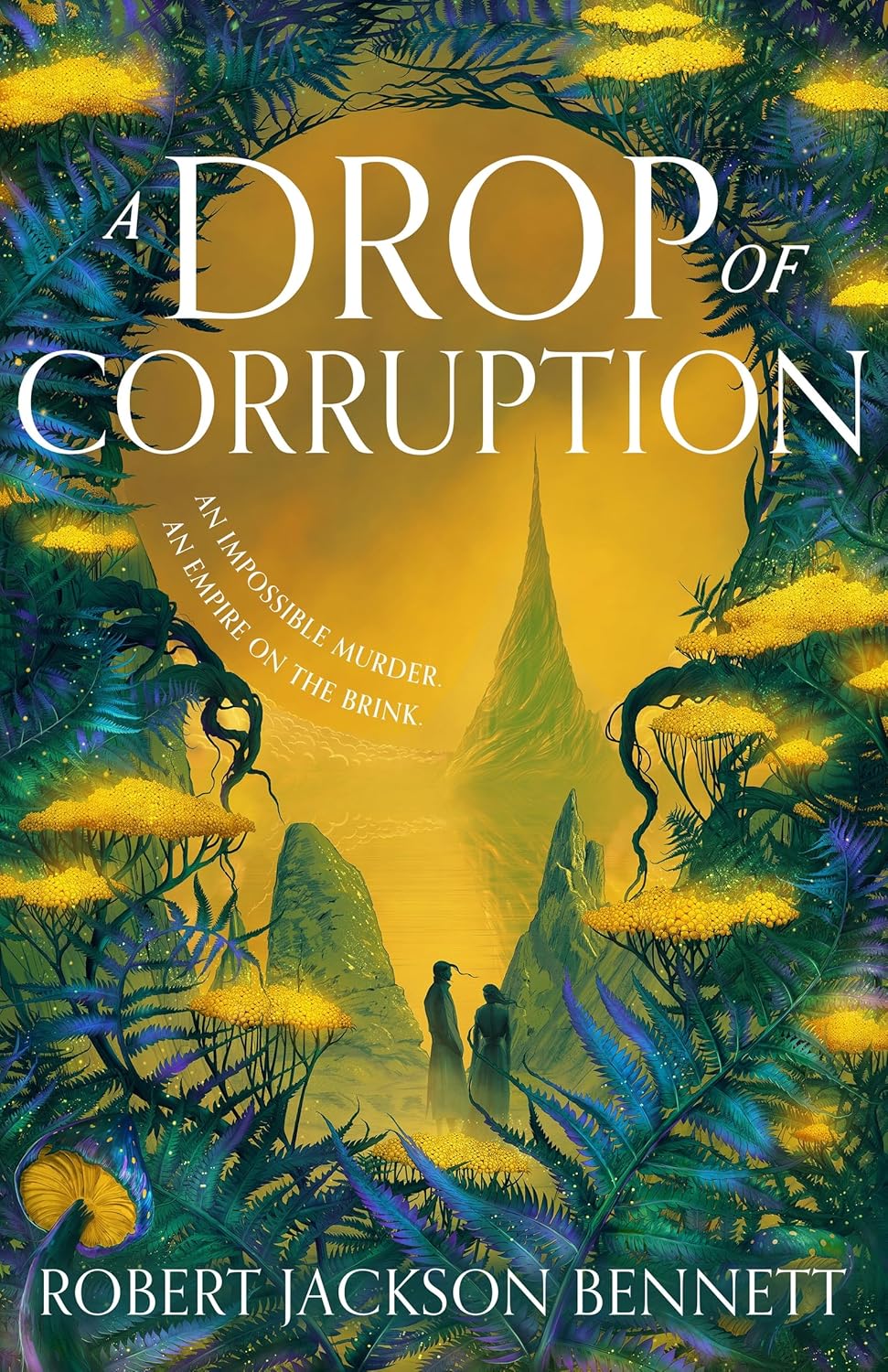
2025/188: A Drop of Corruption — Robert Jackson Bennett

“... they began to exhibit afflictions.”
“Apophenia being the worst, and most notable,” said Ghrelin. “An uncontrollable, debilitating impulse to spy patterns in everything.”
I glanced at Ana, but she only smiled and wryly said, “Oh, I’m familiar with that one..." [loc. 3361]

Sequel to The Tainted Cup, and second in Bennett's 'Shadow of the Leviathan' trilogy. While this didn't wow me quite as much as the first book -- which was so utterly novel in setting and ambience -- it's still a marvellous read. Bennett continues to explore the Empire of Khanum, in this case by venturing outside it. The kingdom of Yarrow trades with the Empire, and is politically unstable: it's also on the coast, a high-risk location because the Leviathans come from the ocean. Much of the Empire's research on leviathans takes place in a facility known as the Shroud, in the Bay of Yarrow.

Engraver Dinias Kol (who can, with the right stimuli, remember everything) and investigator Ana Dolabra (who is wildly eccentric but a brilliant investigator) are sent to Yarrow to investigate the death of a Treasury official. What they uncover is a complex scheme of murder, theft, and insurrection. Ana is delighted, because she's found an opponent whose cunning and misdirection she can respect. Din is ... less delighted, and missing his lover, and worried about the debt he's inherited: he also has to work with a local Apothetikal, Tira Malo, who has greatly enhanced senses and works as a warden. Into the wilderness they go...

This is a novel that works on many levels: a locked-room murder mystery in a world sufficiently alien that the usual deductive process isn't wholly relevant; an examination of kings and why they are not a stable form of government; a story about experimentation and about science... It's great fun, well-paced, and we discover tantalising scraps about Ana's background. (Din is likeable, but Ana is fascinating, and often repulsive.) I'm very much looking forward to the third in the series, due in 2026.

Thursday, November 20, 2025

2025/187: The Fall of Troy — Peter Ackroyd

There are many Turks who believe that the capture of Constantinople was a just vengeance for the fall of Troy. The Greeks were at last made to pay for their perfidy. [loc. 2376]

Reread: my review from 2010 is here. I remembered nothing at all about this novel! Apparently I purchased a paperback copy in 2007: as with almost all of his other novels, no Kindle edition is available.

Ackroyd bases his novel on the life of Heinrich Schliemann, who first excavated Troy, and his marriage to a much younger woman, a Greek (famously chosen on the basis of a photograph and 'Homeric spirit'). Ackroyd's fictional archaeologist is named Heinrich Obermann, and he has all of Schliemann's flaws and more: he's avaricious, racist, an intellectual fraud and a bigamist. He goes by his gut feeling rather than solid archaeological methodology, and he refuses to accept evidence which contradicts his own opinions.

We see him from his wife Sophia's perspective: she doesn't love him, but is determined to make the marriage work. She finds purpose in the excavation of the ancient city, and colludes with Obermann's deceits -- until she discovers that he has lied to her, as well as to everyone else.

I liked the way that Ackroyd wove in some of Schliemann's tall stories (smuggling Priam's treasure away from the site in Sophia's shawl) and I found Obermann's fate rather more satisfactory than Schliemann's: hubris and nemesis.

Tuesday, November 18, 2025

2025/186: Hitwoman — Elsie Marks

...that’s the problem with rich people in the UK – not only are half of them clinically evil, they’re clinically evil bastards who all went to school together and still haven’t grown up. [loc. 2457]

Maisie Baxter works for Novum, a boutique ethical assassination agency. Her boss is the charismatic Gabby Hawthorne (played, in my head, by Helen Mirren); she shares a flat with Beth, who knows nothing about Maisie's job; she's been single for a while, because she can't have a relationship without revealing her secret double life.

But when a man named Will shows up at two of her jobs, and the target is killed before she can take care of business, she becomes suspicious -- not least because, on the first of those jobs, the two of them hooked up for a steamy one-night stand. Will works for a rival agency, but is he the real enemy, or is there something more sinister afoot?

Fun, funny and -- refreshingly -- set in the UK rather than the US, this is classic romcom. I liked Maisie, who is competent and witty and loyal: Will grew on me: the secondary characters, such as Jason the IT guy and Beth the flatmate, felt like people I know. Hitwoman was much-needed light relief after recent reading. Despite its innately violent subject matter, it's a cheering and life-affirming novel, and I hope very much that it's the start of a series.

Sunday, November 16, 2025

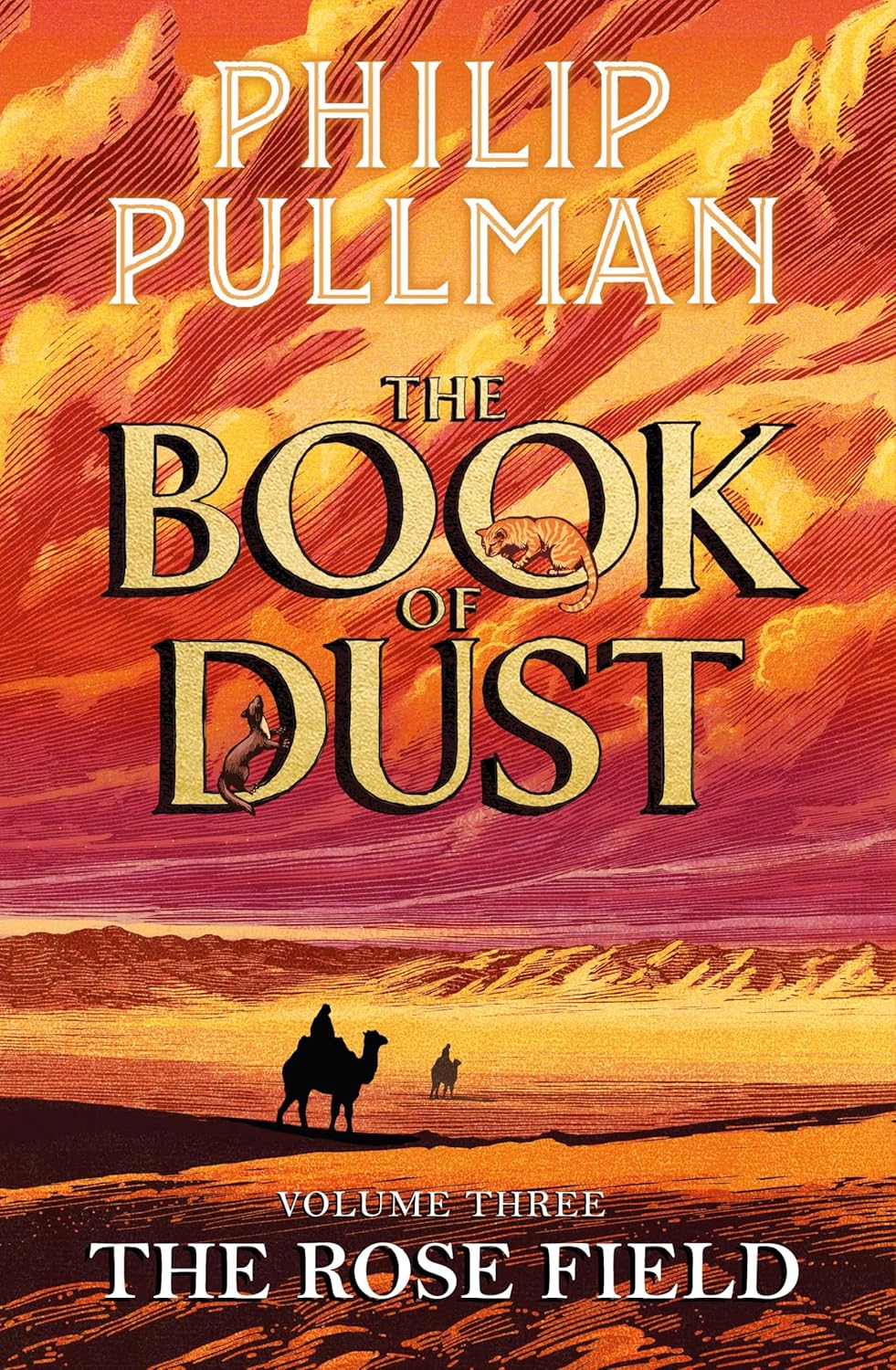
2025/185: The Rose Field — Philip Pullman

I’m a grown woman now, and it’s about time I heard the truth. Because I know that whatever the imagination is, it isn’t just inventing things. Making things up and pretending they’re real is not enough. [loc. 4915]

Twenty-five years ago, in Oxford in August 2000, I interviewed a best-selling fantasy author, who said (among many more interesting things) that he shared an editor with J K Rowling and that this editor had claimed not to be able to contact Rowling. (I suggested that this might explain the length of the fourth HP novel.) That author was Philip Pullman, and I can't help wondering whether his current editor is having a similar issue with Pullman himself. I found this novel overlong, self-contradictory, sprawling, and ultimately unsatisfying.

Which is not to say it's awful: there were likeable new characters, fascinating side-quests and some intriguing hints at how Lyra's world differs from our own. But a long-awaited reunion was described very briefly; a much-signalled romance fizzled out in the final chapters (which was a relief... but it was still a possibility for most of the book); and there is a conversation which basically negates a pivotal scene in the previous trilogy.

I'm not going to go into detail: others have done so, at length. There was a lot to like (such as Lyra's relationship with Asta; Ionides; the gryphons) and I did get caught up in the story. But there are also a lot of loose threads, unresolved subplots, throwaway resolutions. And one key character from the His Dark Materials trilogy is ... changed, shall we say, by revelations in The Rose Field.

It's six years since I read The Secret Commonwealth, and perhaps I should have reread it before starting The Rose Field. But that is a sad and dispiriting novel: this one was simply disappointing.

Edit to add: I was wrong about the editor issue. Apparently there's an interview with Pullman in the audiobook, in which he says that his editor made him change his original ending. Perhaps that ending would have provided more resolution.

Friday, November 14, 2025

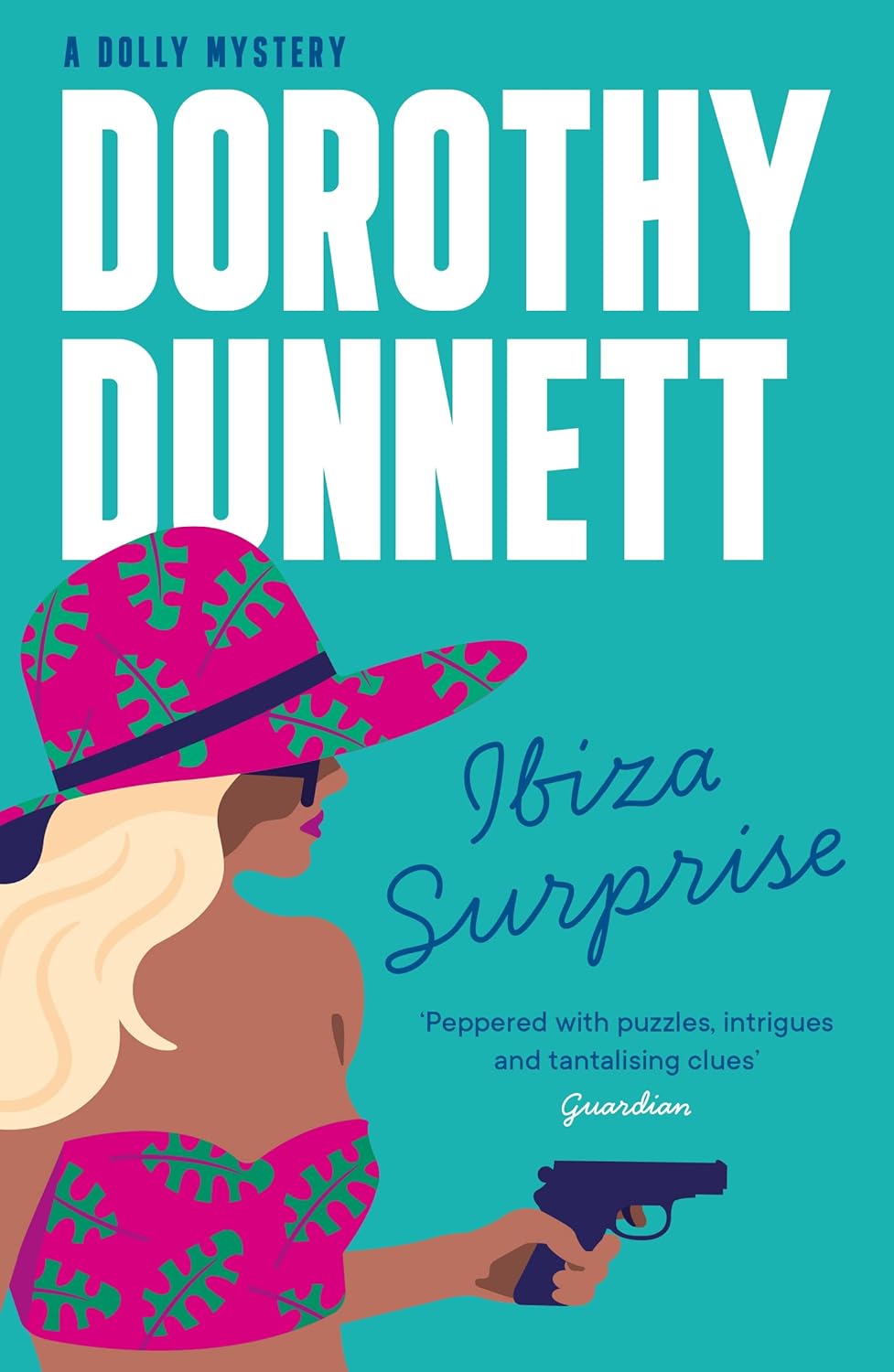
2025/184: Ibiza Surprise — Dorothy Dunnett

I do know the look of a ruby, in the same way that I know sable and ermine and mink. One always knows where one is going, even if one doesn't quite know how to get there. [loc. 2096]

Reread of a novel first read in the 1990s, which I don't think I've revisited since. Certainly I had forgotten all but a few details: melon balls, a corpse on a horse, boring brother.

Ibiza Surprise is set in the late Sixties. Sarah Cassells is twenty years old, the daughter of impecunious Lord Forsey, and (possibly) 'the swingiest chick this side of Chelsea'. She has trained as a cook, lives in London in a flatshare, and makes a living by catering extravagant dinner parties. Her primary aim in life is to find someone 'decent' (i.e. rich) to marry. When her father is found dead in Ibiza, Sarah's financial situation worsens. Then, at the funeral, she meets the father of her schoolfriend Janey Lloyd, who invites her to stay with the Lloyds in Ibiza.

Cue mayhem, an unexpected American widow, a famous portrait painter with his yacht and his bifocals (this is Johnson Johnson, the star-at-one-remove of Dunnett's seven-book 'Dolly' series) and Easter in a small Spanish town.

Several things struck me about this novel. Firstly, how recent the war was: less than 25 years since VE Day. It's unremarkable for Johnson (who's in his forties) to explain his facility with firearms by claiming to have done Special Branch work in the war. Twenty-five years! It's longer than that since I first read this novel. And it makes me think anew about my parents and how recent it was for them.

Second, Sarah is frivolous and flirtatious and quite casual about the risk of one of her beaus assaulting her ('he could swim, too, but you can't rape anyone in deep water, or at least if you can you ought to get a certificate' [1306]). She is determined to marry well -- she thinks it's her only hope of a comfortable life -- but is also not averse to 'courtesy snogging' with a man she's just met. And though she sometimes comes across as vacuous, she is brave and intelligent, and surprisingly competent.

And third: this is Ibiza before the nightclubs and mass tourism. I loved the glimpses of local culture, the medieval town and the religious processions, the gilded statues draped with real jewellery.

Murder mystery quite twisty; Johnson quite peripheral and impenetrable; not enough sailing. I think I'd like to reread more of these, in the spirit in which Dunnett wrote them: a holiday (though not, as in her case, a tax-deductible Business Expense).

Tuesday, November 11, 2025

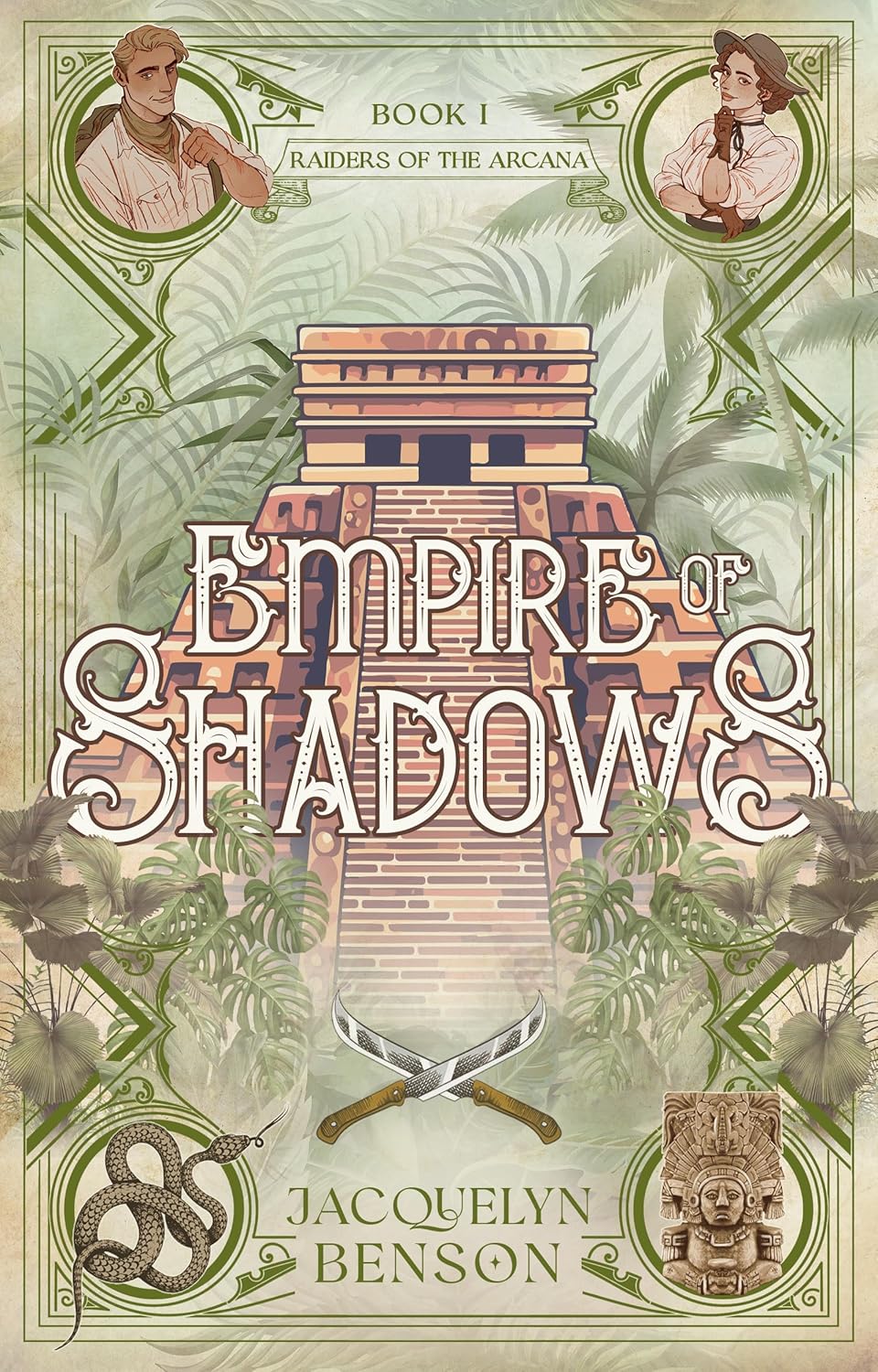
2025/183: Empire of Shadows — Jacquelyn Benson

The stela was clear evidence for the existence of a previously unknown Mesoamerican culture… and Ellie had the map to the heart of it tucked into her corset. [p. 178]

London, 1898: archivist Eleanor Mallory finds herself unemployed after a suffragette protest. ("Just one little arrest, which they aren’t even pressing charges for!") Awaiting her dismissal, she finds an ancient map concealed by her supervisor. It turns out to be a map to a lost city, and in short order Ellie is off to British Honduras, where she encounters the ruggedly-handsome and frequently-shirtless surveyor Adam Bates.

Needless to say, the path to the lost city of Tulan -- whose myths have influenced both Aztec and Mayan culture -- is fraught with peril, from dastardly upper-class Brits to the natural hazards of the jungle. There are revolutionaries, hidden villages, priests and soldiers, exotic beasties, and ancient mysteries. There is a strong fantasy element, with Ellie dreaming of a long-dead priestess and seeking the legendary Smoking Mirror. And there is Adam, who turns out to have principles as well as a knack for survival.

This is a joyous, unapologetic romcom -- it reminded me, at times, of The Mummy and Romancing the Stone -- with a light-hearted tone: it's also a critique of colonialism and an intriguing riff on the myths and legends of Central America. The history and culture of the local people is woven unobtrusively through the story. Ellie and Adam are both flawed and both likeable: the romance doesn't get very steamy in this volume, but I note that it's the first in a series. A cheering read.

Saturday, November 08, 2025

2025/182: Strange Pictures — Uketsu

Adults can draw what they see, the real thing, in their pictures. Children, though, draw the “idea” of what appears in their heads. [p. 82]

Translated from the Japanese by Jim Rion, this short illustrated novel seems at first to be three tenuously-connected novellas. The first begins with a blog on which a man posts some pictures drawn by his wife, who died in childbirth. Each picture has a number... The second story is about a small boy who draws a picture of the apartment block where he lives, and scribbles out the windows of his home. And the third pertains to a grisly unsolved murder mystery, and the implications of the sketch found with the corpse. Gradually, it becomes clear that these are all the same story, or at least all revolve around the same individual.

The pictures (which were clear and readable on my Kindle) definitely added to the story, and drew me into the mysteries: the prose, while simple, flowed nicely. I enjoyed this, though I found some passages disturbing -- even upsetting. And Utetsu makes it easy to sympathise with the villain, who is driven by the need to protect those they care for.

Irritatingly, the Kindle edition starts at 'Chapter One' -- but there is actually an introductory passage before that, which I only noticed when I started to write this review and opened the book in the web browser. Grrrrr. It does cast a different light on the story and provides a lot of insight into the backstory.

Friday, November 07, 2025

2025/181: Murder Most Foul — Guy Jenkin

Even in Deptford, you can’t carry bodies far in daylight... [loc. 1402]

In which William Shakespeare is suspected of the murder of Christopher Marlowe, and makes common cause with Marlowe's sister Ann (formerly Will's lover) to find out who really killed Marlowe, and why. Well-researched, witty historical whodunnit with a credible denouement and some excellent dialogue (Jenkin is an award-winning scriptwriter) and lots of period detail. Also, set in my neck of the woods...

The premise sounded excellent, but didn't quite ring true for me. Perhaps there were too many viewpoint characters -- Will, Ann, Lizzie the Dutch orphan, Bella the spy, the mysterious Widow. Perhaps some of the attitudes were slightly too modern. Perhaps I was just vexed that Marlowe, throughout, was referred to as 'Chris' rather than 'Kit'.

I was drawn into the intricacies of the plot, with all its political layers, and the subtle (and not-so-subtle) references to characters and plot elements from Shakespeare's plays. Will and Ann-without-an-e's relationship was poignant, because doomed. And Jenkin evoked 16th-century London in its stenchful, dangerous glory: an outbreak of plague, anti-immigrant sentiment, filthy streets, squalor.

Despite my reservations and criticisms, I did like it: more, in hindsight, than while I was reading! Jenkin's theory about Marlowe's murder makes a lot of sense, and his dialogue is cracking. I hope it's the first in a series.

An interesting fact I learnt from this novel: cormorants have green eyes!

Thursday, November 06, 2025

2025/179-180: Plum Duff and 'The Saint of the Bookstore' — Victoria Goddard

... it had been said -- it had been believed -- that much of the old, deep magic of Alinor before the coming of the Empire was gone.
The Fall of the Empire had made it clear that that magic was only quiescent... [Plum Duff, loc. 126]

Reread, because (as per the final line of my February 2023 review of Plum Duff) the seventh book in the series really is due soon... I note that on first reading, I found this wintry novel, full of solstice cheer and ancient traditions and the threat of the Dark, less enjoyable than the 'cosier, more mannerist' novels that preceded it. I do think it feels as though the scope of the story is expanding rapidly:  but given the miracles and wonders of the previous pair of novels, that makes more sense to me this time around. And I'm more intrigued than before by the two-tailed fox, the hints of the Good Neighbours, and the penalty Mr Dart has paid for his stone arm.

And then to The Saint of the Bookstore, which is really a short story and as such probably didn't count (or wasn't counted) back in 2023. I have a feeling I read it quite a while after the novels. This time around, it felt more powerful. 

Sister Mirabelle of the Linder Church of the Lady is sent to Ragnor Bella to investigate rumours of a saint. Her job is to determine whether it's magic, trickery, or actual miracle. She finds herself in a bookstore, where a young man welcomes her -- and then turns to tending a small girl who stumbles into the shop, barefoot and shivering. Sister Mirabelle assists, and is present when two more young men turn up. The good-looking blond, she notes, has a massive crush on Jemis Greenwing...and their mutual friend, the man with what seems to be a dog but isn't, is well aware of it.

I do love to read familiar characters as seen by an outsider, and Goddard does it brilliantly here, as well as putting some of the events of the series into a wider theological context. I'd be interested to read Sister Mirabelle's report.

I am so looking forward to Bubble and Squeak...